

Do you want to make a difference in your life? Would you like to reduce the debt that is piling up, advance in your career, or build a business with more customers? Would you like to see your money go further each month? Reiki will not do these things for you, and no practice can promise money or success. What it can offer is a calm, reflective space in which to get clear about your goals — and clarity is most useful when it is paired with a practical plan.
Reiki is a serene practice for the mind, body, and energy systems. Many practitioners describe it as a calming anchor in their routine.
The Reiki tradition uses symbols that are traditionally described as divinely attuned. The idea that everything is made of energy is, here, a spiritual and symbolic way of speaking rather than a physics claim; it is not a scientific explanation of how Reiki works.
In the symbolic language of the tradition, a bank balance and an ache are both spoken of as energy seeking harmony. Treated literally, that idea is misleading: money is a social and financial matter, and a persistent ache is a physical symptom that deserves proper medical attention.
Success is not impossible, but it is built from ordinary effort, opportunity and circumstances, not from Reiki alone.
There are many paths to success, and many Reiki practitioners describe the practice as one that has supported their personal growth and sense of direction.
Energy as a Spiritual Metaphor
This section describes a metaphor used in some spiritual circles, not a physics lesson. As a metaphor, the idea is that people, objects and money can all be pictured as patterns of energy at different densities.
It is sometimes claimed that the physicist Niels Bohr "proved" that reality is simply vibrations. That is a misreading of Bohr's work on quantum theory, which concerns the behaviour of subatomic particles and does not say that thoughts shape money or events. Different people do perceive the world differently, but that is a matter of perception and experience, not proof of a Reiki mechanism.
An artist and a business owner can look at the same street and notice entirely different things, for example. That tells us something about attention and training, not about energy fields.
Different people certainly experience the same event in different ways, and those experiences shape how they respond to it. But finding Reiki meaningful does not require a claim that it works through electricity or vibration.
In the tradition, Reiki is described as establishing a link with a universal energy and inviting it to work with you rather than against you. That is a statement of belief, not a tested mechanism.
Some writers compare this to reprogramming a machine. It is a vivid metaphor, but people are not machines, and lasting change usually comes from consistent habits, support and practical decisions rather than from a single practice.
Your thinking does matter: it shapes what you notice, what you try and how you respond to setbacks. But thoughts do not become things by themselves, and it is unfair and inaccurate to suggest that people who are struggling simply have not thought positively enough. Use reflection to clarify what you want, then take ordinary steps toward it.
Effective Reprogramming
Money is not a form of energy, and no practice can draw it toward you. What Reiki can offer, in the tradition, is a settled space that may help you think more clearly when you are exhausted or overwhelmed.
Let us look at the ways Reiki is used alongside goal-setting. Practitioners may describe it as helping them stay focused on the path that feels right for them; it will not win you a lottery or guarantee any financial outcome.
New methods and symbols are developed over time, and many people find them meaningful. In the tradition, approaching the practice with greed or envy is discouraged. A more useful aim is to be honest about what you actually need and to focus on that.
Cho Ku Rei
Cho Ku Rei is Usui Reiki's power symbol, and it is also used in other types of Reiki. Some teachers gloss the name as "Place the power of the world here"; translations vary by lineage.
In the tradition, Cho Ku Rei is said to empower whatever it is drawn upon, and some practitioners draw it on a wallet or a cheque as a symbolic way of focusing their intentions around money.
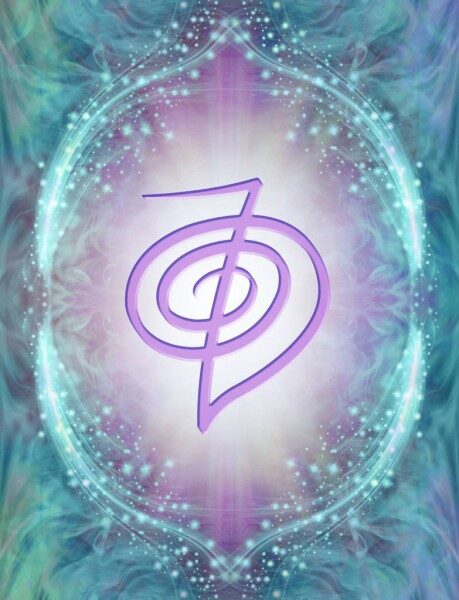
Practitioners describe a quiet sense of focus and steadiness in their financial affairs when they use the symbol as part of a reflective routine. This is a symbolic practice, not a financial one, and it does not change your income or debts.
Some practitioners draw the symbol on their bills, cards and statements as a ritual of intention, picturing money circulating fairly and generously. It can be a meaningful habit, but it is not a substitute for budgeting, getting help with debt, or seeking proper financial advice.
Some traditions teach that rapid wealth is not always in a person's best interests. Be careful with the idea that a spiritual force is holding money back from you: it can turn ordinary hardship into a personal or spiritual failing. Wealth and poverty are shaped by pay, health, caring responsibilities, discrimination, inheritance and luck far more than by anyone's inner state.
If you do want to improve your finances, the useful work is practical: understand your income and outgoings, deal with debt, ask about benefits or support you may be entitled to, and speak to a qualified financial adviser or debt service. Reflection can sit alongside that work, but it does not replace it.
It is often suggested that the answer lies in your energy system or in signs from the world. Treat such ideas as beliefs, not explanations. Shame and resentment are worth tending to for their own sake, with the help of a counsellor or trusted person if they feel heavy, but they are not the reason you may lack money.
This is the kind of claim that can leave people blaming themselves for hardship. There is no evidence that fear or resentment caps your income; structural and practical factors matter far more.
If you have lost money, it is not because your soul chose a lesson for you. Loss usually has ordinary causes — a job ending, a bad investment, an illness, a relationship change — and the compassionate response is practical support and, where needed, professional advice.
Wealth and purpose are not opposites. Many people use resources to care for others, and many do meaningful work with very little money. What matters is what you value and how you treat people, not a fixed rule about income.
Usui Reiki traditionally uses four main symbols, with the Master symbol used by Master practitioners when working with students. It is described as bringing the four symbols together into one.
The four main symbols are as follows:
- Cho Ku Rei
- Sei Hei Ki
- Hon Sha Ze Sho Nen
- Dai Ko Myo
In the tradition, these four symbols are associated with bringing the whole person — energetic, physical and spiritual — into harmony. They are not a route to large sums of money, and no symbol confers a "Midas touch".
The old story of the Midas touch is a warning about the cost of endless acquisition. Many people report a deepening sense of wellbeing when they tend to their health, relationships and sense of purpose first.
A weekly reflection and planning loop
A goal is easier to work with when reflection and action take turns. One simple loop is to set aside twenty minutes once a week.
- Review the week. What did you actually do, not what did you intend to do? Note any progress, however small.
- Name the obstacle. Is it time, money, skills, confidence, other people, or something you cannot control? Be specific.
- Choose one next action. It should be small enough to complete in the coming week and specific enough that you will know whether you did it.
- Use Reiki, if you wish. Sit quietly for a few minutes and hold the goal in mind without demanding a particular outcome. You might ask, “What am I not seeing?” and then write down whatever ordinary thought arrives.
- Put the plan somewhere visible. A calendar entry, a note on the fridge, or a message to a friend is more useful than a symbolic gesture alone.
This loop keeps the practice in proportion. Reiki may help you pause and reflect, but the review, the obstacle, and the action are what move the goal forward.
When to get financial advice
If your goal involves debt, benefits, investments, or a business, the stakes are practical and sometimes legal. A Reiki symbol drawn on a bill is a ritual, not a financial plan. Free and low-cost help is often available through debt advice services, citizen advice organisations, and business support agencies; a qualified adviser can look at your actual circumstances and explain the options.
Be cautious with anyone who combines spiritual language with promises of wealth, certain profits, or “abundance” that depends on paying them. If an offer pressures you to act quickly, borrow money, or keep the arrangement secret, stop and seek independent advice. A legitimate adviser will welcome questions and will not claim that your doubts are blocking your prosperity.
Set your goals with care, take practical steps, and let the practice support your reflection rather than carry the whole weight of your hopes.
Related topic: Reiki healing guides, Heyoka empath, Levels of consciousness, Inspirational quotes, The benefits of Reiki healing.