
Traditionally the Karuna Ki symbols are used in the same way as the Usui Reiki symbols. They can be drawn at the start of a session, on the palms, or in the air near the person receiving the session—with their permission. As described elsewhere, the symbols' names can be chanted or intoned.
The descriptions below come from a modern Reiki lineage and are drawn from a variety of sources, including Light and Adonea's Karuna Manual, Kathleen Milner's books, and various Karuna websites. They are that tradition's symbolic and spiritual attributions, not established effects, and they are not a substitute for medical or mental-health care. Work only with a recipient's consent.
ZONAR
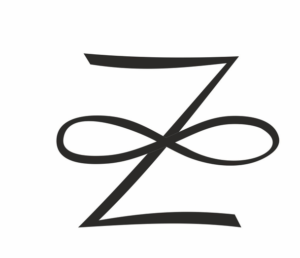
Pronounced "Zoe nar." In the tradition's account, Marcy Miller channeled it after receiving it from Sai Baba during a meditation. Some teachers interpret the name as "eternity." To draw the symbol, draw the "Z" three times, then the infinity symbol. This symbol is traditionally used to reflect on past lives. Some Karuna Ki teachings use the image of releasing trauma held in cells as a spiritual metaphor; it is not a factual account of how cells store memories. The symbol is also said to help clarify issues and open the mind. The practice also describes Zonar as offering access to other dimensions. In Karuna Ki, the specific technique for using Zonar is described as connecting to the infinite loving, compassionate energy of the divine source.
Reiki is a complementary relaxation practice, not therapy or treatment for trauma or abuse; trauma and abuse are matters for qualified professional care.
HALU
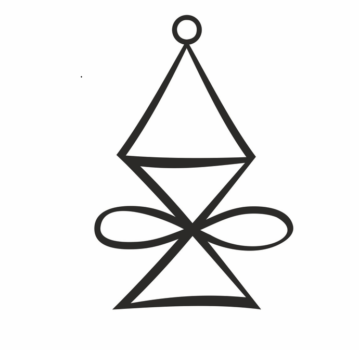
Pronounced as "Hay-lou." In the tradition, Kathleen and Marcy channeled it from Sai Baba during a meditation. True love and beauty are Halu. It also means peace. It is described as a deeper healing ray. This symbol is a zonal amplitude; the Z is finished and the pyramid has been added. Zonar is thought to be more powerful than Halu because it works in higher dimensions. Halu is said to promote deep healing on causal and karmic levels. Sei Hei Ki, like the Usui Reiki symbol, is supposed to help dissolve negative patterns in the unconscious mind that keep us from the truth, as well as delusion and denial. Some teachers describe Halu as helping practitioners work with what they call psychic or psychological attacks; this is a spiritual interpretation, not evidence that another person or force is attacking you. To use Halu for this, draw the symbol in the air and connect it to the divine compassion in your heart. Take in the symbol and its energy. Practitioners describe this visualization as a way to feel protected and to respond with compassion. Raise your hands and imagine responding with compassion to people with whom you feel in conflict; this is a focus for your own choices and boundaries, not an instruction to direct Reiki at another person without their agreement. The teaching echoes the instruction to love your enemies and pray for those who persecute you, and this method is offered as a way of embodying that belief.
HARTH
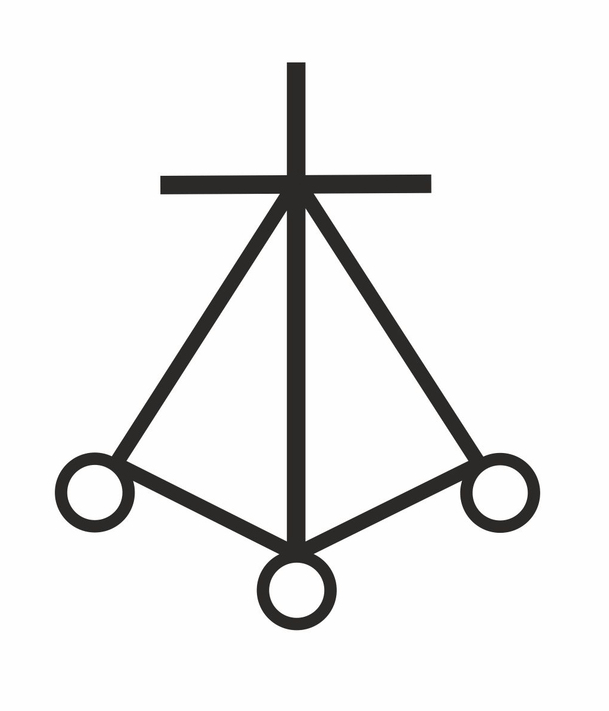
This symbol is pronounced as written. Kathleen Milner and Marcy Miller channeled it. Love, Beauty, Harmony, and Balance. It is Karuna Ki's main symbol, representing the source's infinite love and compassion and the healing, loving heart. It is traditionally believed to soften the heart and awaken Karuna (compassion). Practitioners describe a renewed harmony in their relationships and a returning passion for life and work. Many report that Harth brings a deep release from habits and patterns that no longer serve them.
RAMA
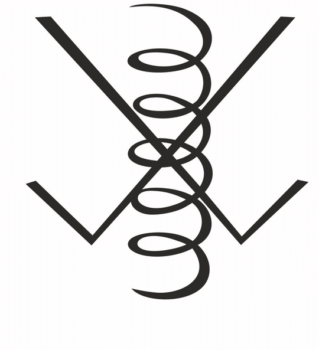
It's pronounced "ra-ma." Kellie-ray Marine channeled it. Rama is interchangeable with Ram or God. Rama connects with earth energy and the six directions. It is said to open, align, and balance the lower chakras and to sync the upper and lower chakras. Rama is traditionally worked with for lower chakra issues (survival, overindulgence, desire, power struggles, and similar themes). In the tradition it is used to cleanse crystals and a room, and is described as supporting resolve and the pursuit of material goals. It is said to open the feet's chakras and connect them to the earth's energy, balancing it and increasing the amount of Ki energy channeled.
GNOSA
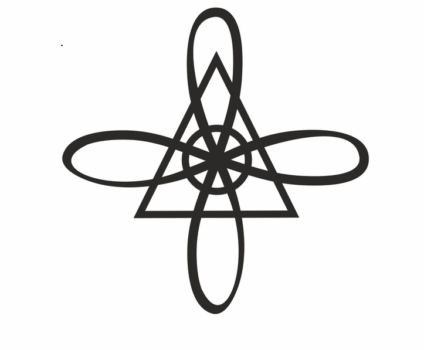
Pronounced as "Know Sa." In the tradition, Maria Abraham channeled it. Maria and Kathleen call it "Planetary Healing and Enlightenment." Some teachers use GNOSA to describe spiritual knowing or connection with the divine; accounts of the name and its meaning vary. Gnosa is said to bring higher consciousness into the body and raise awareness of self-dimensionality. The tradition describes it as spinning a merkaba in the heart, raising consciousness. Like Harth, it is a primary symbol in Karuna Ki. GNOSA is described as developing our oneness with God's compassion.
KRIYA
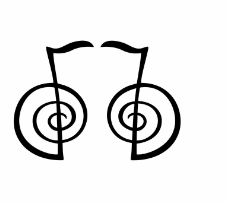
It's pronounced "kree yah." It's the perfect balance. Pat Miller channeled it. Kathleen Milner calls it "Cho Ku Rei" or "double Cho Ku Rei." Kriya is an action verb; the Kriya Law is described as one of action and creation. Draw the symbol with both hands. In the tradition, Kriya is used to manifest, to bring in and release energy, and to raise awareness. The tradition records that its blessing reaches the whole human family. "You are in perfect balance and oneness with all that is," it says as it sweeps over the body and hands (on knees).
IAVA
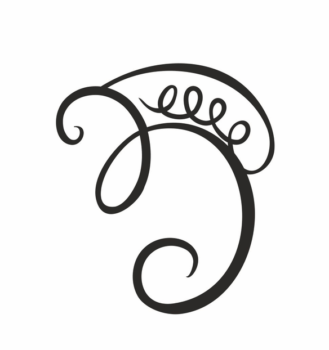
It's pronounced "ee-ah-vah". Catherine Mills channeled it. Less is more. Say "Earth" with the first small loop, "Water" with the second, "Wind or Air" with the third, and "Fire" with the fourth. Iava is said to help us see through our conditioned thoughts and beliefs, so that we are freer to respond to others in the moment rather than reacting to past conditioning. It is described as enhancing real-world awareness and helping you carry out your own plans. Iava is called a planetary healer, working with the Earth's situations, places, and upheavals.
SHANTI
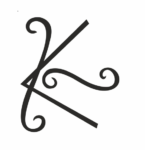
It's pronounced "shawn-tee." Pat Courtney channeled it. Shanti means "peace." Shanti is described as a gentle presence in the healing journey, helping you live in the moment and let go of the past and future. In this view, healing can be hindered by past hurts and dreams, and Shanti helps us stop re-creating past feelings and beliefs for ourselves. Sending peace to these past situations is said to free us from our past attachments. We heal in love. Shanti is said to calm the aura, dispel nightmares, and support the best possible results. It allows for fusion; according to Kathleen Milner and William Rand, this is described as occurring on seven dimensions. "You are filled with Divine Peace," says Shanti, drawing over the body and sweeping off the hands (on knees).
OM
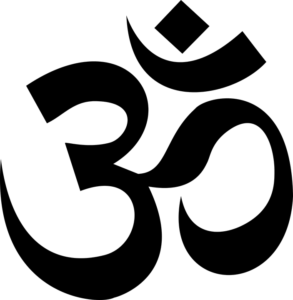
"Ah, uu mm." In many eastern spiritual practices, the Sanskrit symbol is used. A father-mother beckoning creation, U = son/daughter, the evolution of individual souls, and M absorbing all that is created. The Universe's sacred sound. Om is chanted and visualized in gold by individuals or groups, and is traditionally associated with purification, stability, protection, and connection with the divine. It represents the three manifestations of all life: creation, preservation, and destruction. Use it to seal in other symbols or parts of the attunement. Om is said to open the crown, a pathway to God and higher consciousness.
The Bottom Line
In the tradition, Karuna Reiki is used alongside traditional Reiki as a deeper and more expansive practice. Those who’ve gone through the Karuna Reiki process describe it as a profound path, one that teaches how to accept, forgive and understand.
Learning the symbols without overclaiming
The names below are pronounced in different ways by different teachers, and the drawings are usually taught in person rather than copied from a web page. The table is a memory aid for students who already have a teacher, not a substitute for instruction.
| Symbol | Common pronunciation | Traditional focus |
|---|---|---|
| Zonar | "Zoe nar" | Reflection on the past and clarity |
| Halu | "Hay-lou" | Love, peace and compassion |
| Harth | "Harth" | The heart and compassion |
| Rama | "Ra-ma" | Grounding and lower-body themes |
| Gnosa | "Know-sa" | Spiritual knowing and awareness |
| Kriya | "Kree-yah" | Balance and action |
| Iava | "Ee-ah-vah" | Conditioned patterns and the elements |
| Shanti | "Shawn-tee" | Peace and letting go |
| Om | "Ah, uu, mm" | Sacred sound and closure |
A simple way to study one symbol is to give it a week. Draw it once at the start of a short meditation, say its name quietly, and let it be the focus of your attention. Do not expect a particular sensation or message. At the end of the week, notice whether the practice helped you concentrate, reflect or act more kindly; those are ordinary outcomes that do not require a metaphysical explanation.
Using symbols with other people
Before drawing a symbol near another person, ask whether they want that. A recipient does not need to know the symbol's name or share its associations. You can explain, "I am using a symbol from my Reiki training as a focus; it is not a medical treatment." Keep your hands at the distance they have agreed to, and do not trace on the body unless they have specifically consented.
Some lineages treat the symbols as secret and ask students not to publish their forms. That is a legitimate teaching boundary, and this page does not reproduce the drawings. Respect the boundary you were taught while being honest with recipients about what you are doing.
Related topic: Karuna Ki, Chanting and toning, Karuna Ki scanning, Four Karuna Ki Do meditations, Level one attunement.