


Some families include Reiki in quiet time together. If your family practices Reiki, you can describe it as a spiritual or relaxation practice and let a child decide whether they want to join. Reiki has not been clearly shown effective for health-related purposes, and its proposed energy field has no scientific support (NCCIH). It should not be presented as treatment for a child's illness, injury, sleep, attention, or emotions.
Reiki is a complementary practice, not a substitute for medical care; check with a qualified medical professional about your own health, especially if you are pregnant or have an existing condition.
Make it optional and child-led
A child can watch, ask questions, try a breathing or quiet moment, or decline. Ask before offering touch, respect “no” or a change of mind, and never require a child to give Reiki to someone else. With babies and younger children, caregivers remain responsible for noticing and responding to their needs; crying or other symptoms should not be interpreted as an energy problem.
Evidence about complementary approaches in children is limited, and many approaches have not been tested for safety in children. NCCIH advises not to replace or delay conventional care or prescribed medicines with an approach that has not been shown safe and effective. Discuss any health-related use with the child's qualified health care provider (NCCIH guidance for children). A class that includes children needs a different consent conversation; planning your first Reiki class covers enrolment and touch agreements.
A quiet shared moment
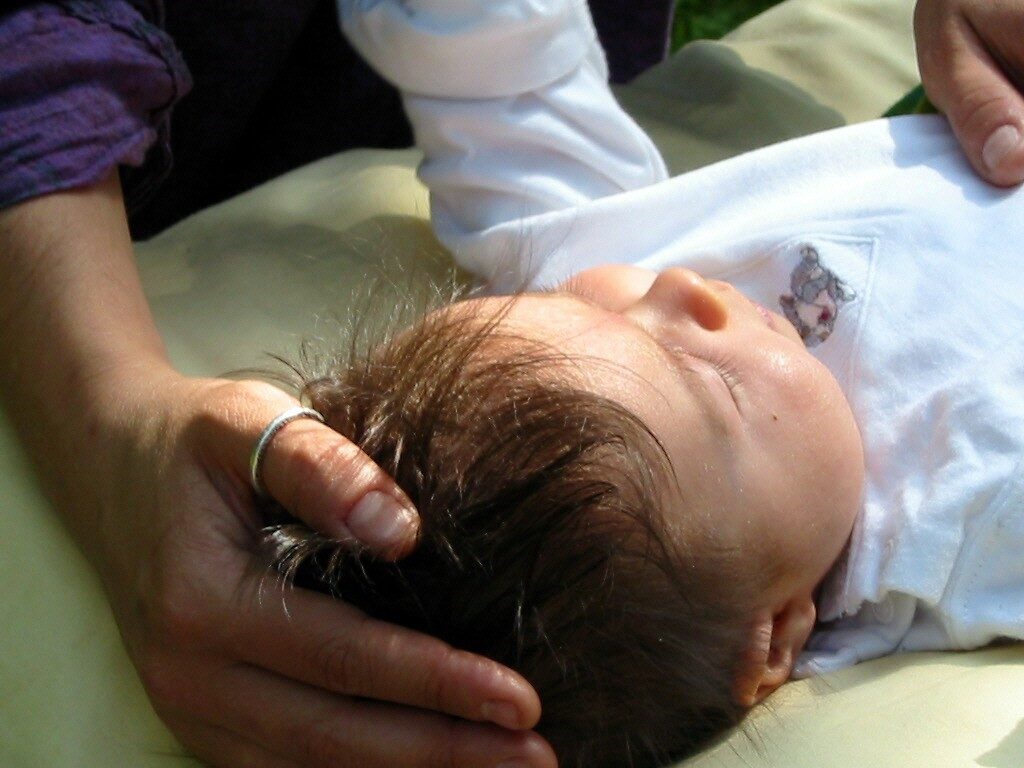
If the child welcomes it, a short, quiet pause can be a chance to sit together, breathe naturally, or reflect on how each person is feeling. The child may prefer no touch. Do not promise that the practice will improve sleep, reduce worry, or change behavior; children vary, and Reiki has not been established as a way to produce those outcomes.
One Reiki principle is often expressed as “Just for today, I will not worry.” Families may use principles as prompts for gentle conversation, not as rules that a child must suppress fear, anger, or sadness. Encourage children to tell a trusted adult when they are upset or need help.
Support everyday care
A Reiki ritual can sit alongside ordinary caregiving, such as listening, comfort, rest, hygiene, and appropriate medical care. It does not build immunity, prevent infections, heal fractures, or replace first aid. For a fall, injury, fever, breathing problem, or other health concern, respond to the child's needs and seek appropriate care; do not delay it to offer Reiki.
If a child is learning self-Reiki, frame it as a practice they may choose for personal reflection. Do not tell them it can identify what is wrong or make illness resolve without help. Caregivers should use their judgment and contact the child's clinician when symptoms are concerning.
Attention, feelings, and growing up
Children's attention, sleep, and emotional regulation can be affected by many circumstances. Reiki should not be used to explain a child's behavior or as a substitute for discussing concerns with the child, their caregivers, teachers, or qualified professionals. A quiet family ritual may be meaningful to some children, but it is not a treatment for attention problems, tantrums, or emotional distress.
If using Reiki principles as family values prompts, keep them compassionate and age-appropriate. “Just for today, I will not be angry” should not mean that anger is forbidden; children can name feelings and learn safe ways to respond. “I will be kind to my neighbor and any living thing” can open a conversation about kindness, boundaries, and respect.
Kindness and respect

A first conversation with a child
You do not need a formal lesson to introduce Reiki. A short explanation in everyday language is enough: “Sometimes I sit quietly and rest my hands to help myself feel calm. It is part of what I believe. You can join me or not; it is up to you.”
Let the child ask questions and answer them honestly. If they ask about using Reiki when they are unwell or hurt, explain that they should tell a responsible adult and get appropriate care. If they ask whether it is magic, you can say that some people experience it as spiritual and others do not, and that they are allowed to make up their own mind when they are older.
Avoid using Reiki as a reward or a punishment, and do not make a child's participation a test of family loyalty. A child who is curious can watch; a child who is not can leave. If the child wants to put their hands on a parent's shoulder, that is ordinary affectionate touch, not a treatment, and it should stop whenever either person wants.
When another adult disagrees
Families often include people with different beliefs. A grandparent, teacher, or other parent may be skeptical of Reiki or worried that it is replacing medical care. You do not have to win the argument. You can explain that the practice is optional, that it is not a treatment for illness, and that the child's medical care is separate.
If another adult is responsible for the child's care, agree on clear boundaries: who offers Reiki, when, and what happens if the child says no. Do not practise on a child in secret or tell them to keep it from another caregiver. Secrecy undermines trust and can put the child in an awkward position.
If there is a genuine disagreement about a child's health care, seek advice from the child's clinician and, if needed, a mediator or legal adviser. A spiritual practice should not become a battleground that leaves the child responsible for managing adult conflict.
Families may choose to talk about harmony, compassion, and care for living things. Share Reiki as part of your own tradition if you wish, while making room for a child to form their own views and choose whether to participate. For related guidance, see Reiki with pregnancy, babies, and children and the five Reiki principles.
Related topic: Reiki healing guides, Heyoka empath, Levels of consciousness, Inspirational quotes, The benefits of Reiki healing.