
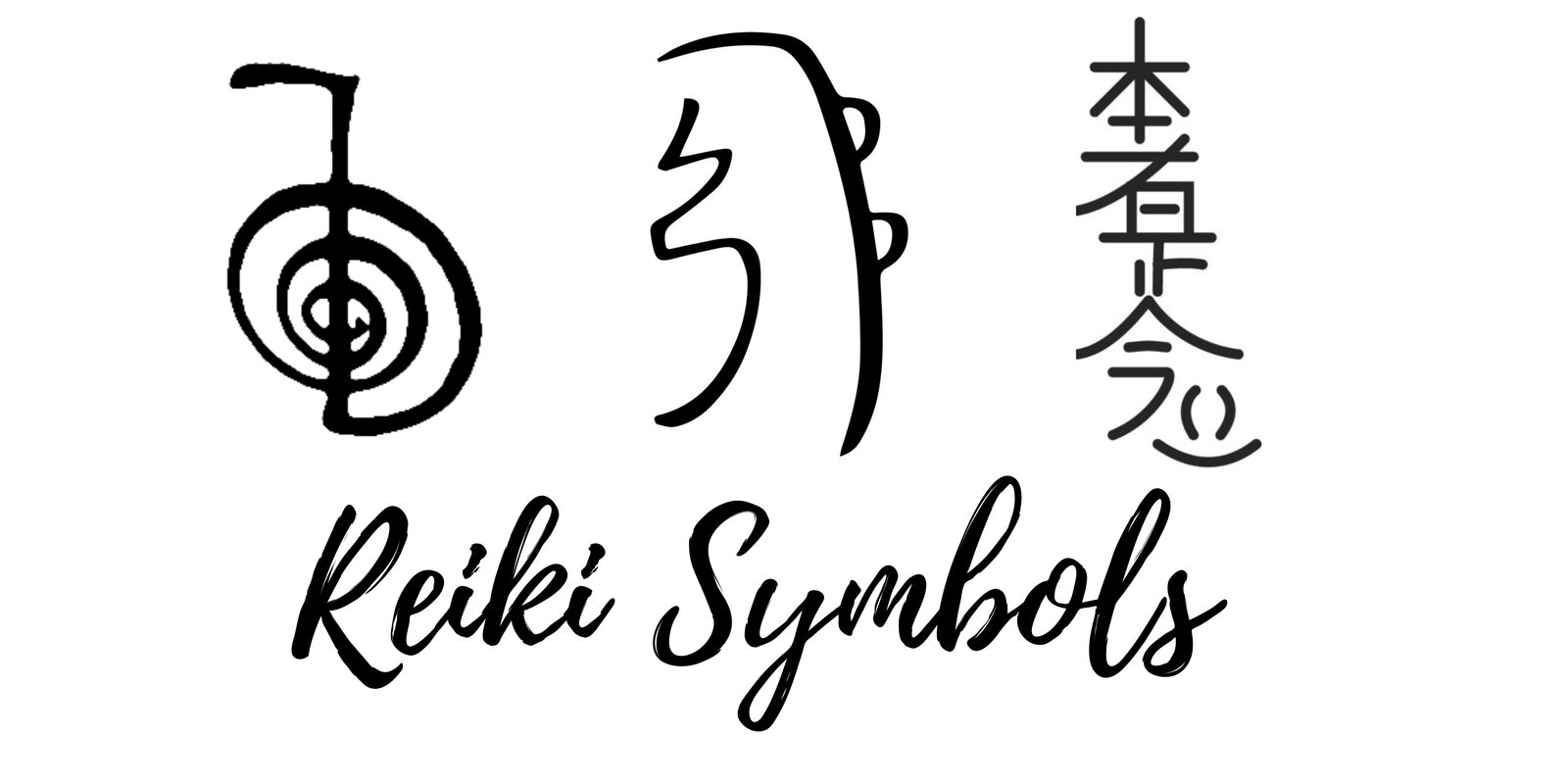
Cho Ku Rei, Sei He Ki and Hon Sha Ze Sho Nen are the three symbols most often taught in Usui-style Reiki Level 2 courses. They are usually presented in that order, but their forms, stroke counts, pronunciations and explanations vary between lineages. This page follows the presentation used in this course and describes the symbols as living teaching forms, with the caveat that another lineage may draw or name them differently.
The broad Reiki symbols overview explains where these three fit into the wider system. This page stays with the Level 2 set: what each symbol looks like, what its name is commonly taken to mean, how it is traditionally used, and what changes when you compare one lineage with another.
The Three Level 2 Symbols at a Glance
| Symbol | Common English name | Traditional role | Form as taught here |
|---|---|---|---|
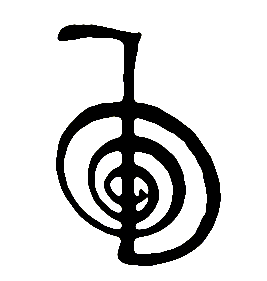
| Cho Ku Rei | Power or Focus symbol | Gathering attention; beginning a practice; focusing Reiki | A central stem with a hooked top and a spiral around it; three strokes in this course |
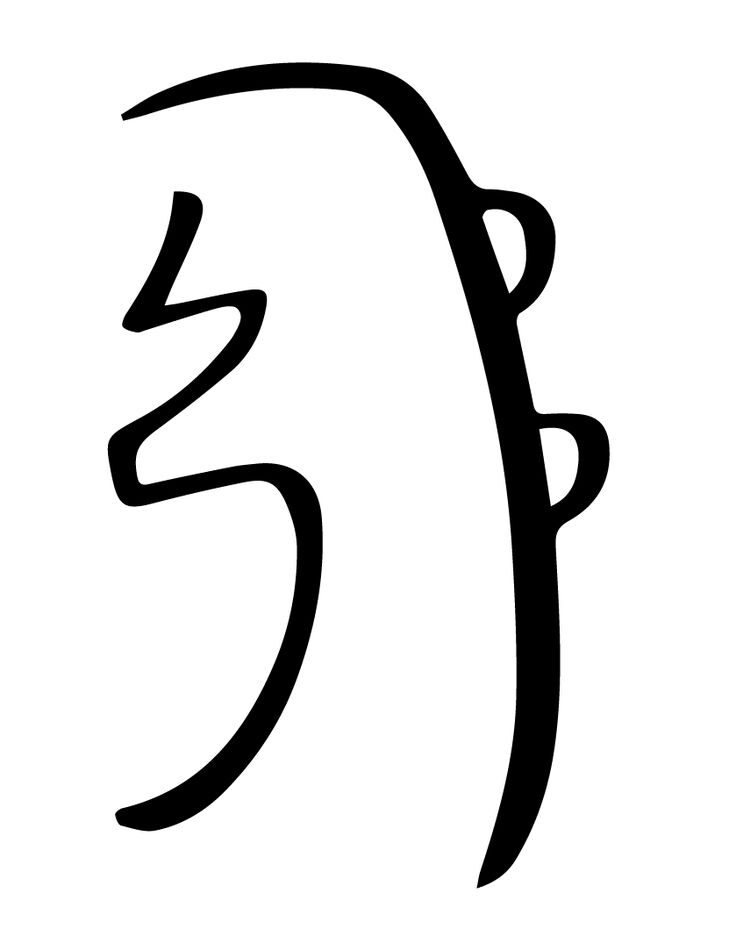
| Sei He Ki | Harmony or Mental/Emotional symbol | Reflection, balance and a gentler quality of attention | A vertical stem with curved elements to the left and two small loops to the right; nine strokes in this course |
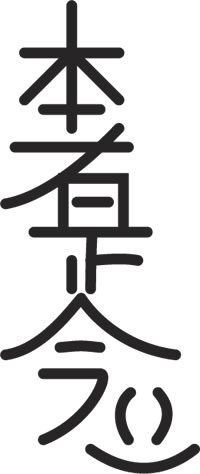
| Hon Sha Ze Sho Nen | Distance or Connection symbol | Connecting across distance, memory or an imagined time | A vertical column of kanji-like elements; twenty-two strokes in this course |
The stroke counts are memory aids used in this course, not an international standard. Another teacher may count the same drawing differently, use a different drawing, or describe the symbol with a different name. That is normal in a tradition without a central authority.
Cho Ku Rei: The Power or Focus Symbol
Cho Ku Rei is the first symbol most students meet. It is often pronounced "cho koo ray", though pronunciation varies by teacher and language. English-speaking lineages usually call it the Power symbol or the Focus symbol. Both names describe its traditional role: it is used to gather attention and begin a practice.
What the name is taken to mean
The name is often broken into syllables and interpreted as something like "place the power here" or "cut through and focus". These are lineage explanations, not a settled word-for-word translation. Some teachers emphasise the idea of placing or focusing energy; others emphasise clearing or cutting through distraction. The differences matter for how the symbol is taught, but they do not establish a physical mechanism.
How the form is built
In this course, Cho Ku Rei is described as three strokes. The drawing has a central vertical stem, a short hook at the top, and a spiral that winds around the stem. The spiral may be drawn inward or outward depending on the teacher, and the hook may be more or less pronounced. Some lineages draw a simpler spiral with a single line; others use a form closer to a Japanese character.
When you learn it, pay attention to the order of the parts rather than only the final shape. A common teaching sequence is to draw the stem first, then the hook, then the spiral. Your teacher may reverse that order or treat the whole form as one continuous movement. Follow the sequence you were given, and ask which parts are considered essential.
Traditional uses
In Reiki teaching, Cho Ku Rei is associated with:
- beginning a session or a self-treatment;
- focusing attention on a hand position or an area of the body;
- "empowering" another symbol drawn after it;
- marking a boundary around a practice space;
- a brief visual anchor during meditation.
These are ritual and teaching functions. In practice, Cho Ku Rei marks a beginning, gathers attention and gives the hands a shape to return to. If a teacher describes it as protection, that language belongs to the tradition's symbolic vocabulary.
Learning the drawing
A practical way to learn the form is to draw it large on paper, compare it with your course material, and then draw it again from memory. Keep the paper; it shows you which part you are consistently forgetting. Once the shape is familiar, draw it in the air at a comfortable size. The goal is a recognisable, repeatable form, not calligraphy.
Sei He Ki: The Harmony Symbol
Sei He Ki is usually pronounced "say high key". English-speaking lineages often call it the Harmony symbol or the Mental and Emotional symbol. It is traditionally used with Cho Ku Rei, and many teachers describe its quality as gentler or more reflective.
What the name is taken to mean
Teachers gloss Sei He Ki in different ways. Some emphasise balance, becoming or restoration; others connect the syllables with light, truth or the movement of the mind. These are interpretive readings. The name is best held as a focus for reflection: what am I bringing to this situation, and what would a more balanced response look like? That is a question a person can act on.
How the form is built
In this course, Sei He Ki is described as nine strokes. The drawing has a long vertical stem, a curved hook-like element to the left, and two small loops attached to the right side of the stem. The exact proportions vary between teachers, and some versions look more like a stylised character than a geometric diagram.
As with Cho Ku Rei, the order of the strokes matters more than perfect proportions. A common approach is to draw the main stem first, then the left-hand curve, then the loops on the right. If your teacher uses a different sequence, use that sequence consistently. The form is a memory aid, not a test of artistic skill.
Traditional uses
In Reiki teaching, Sei He Ki is associated with:
- mental and emotional reflection;
- restoring a sense of inner balance;
- softening a harsh or repetitive thought;
- preparing for a conversation or a difficult decision;
- combining with Cho Ku Rei at the start of a session.
The symbol is traditionally used to support reflection and inner balance. In a session, let the recipient set the pace and decide what they want to explore. If you are working with a mental-health concern, professional care and trusted people matter; a Reiki practice can sit alongside them.
Working with emotions responsibly
Some Reiki teaching describes Sei He Ki as a way to "release" negative patterns. A gentler way to hold that language is as an invitation to notice a pattern and choose a response. If you use the symbol in a session, keep the focus on the recipient's comfort and choices. Do not suggest that a difficult emotion is a sign that the symbol is working, and do not encourage anyone to disclose more than they want to.
Hon Sha Ze Sho Nen: The Distance Symbol
Hon Sha Ze Sho Nen is usually pronounced something like "hon sha zay sho nen". English-speaking lineages call it the Distance symbol or the Connection symbol. It is the third of the core Level 2 set and is traditionally associated with practice at a distance.
What the name is taken to mean
The name is often interpreted through a phrase about the Buddha or the divine in one person reaching the Buddha or the divine in another. Other teachers render it differently, and some emphasise the ideas of past, present and future. These are traditional readings, not a single translation accepted by every school.
The name describes a way of holding another person, place or period in mind. The practitioner's intention and attention are doing the ordinary work; the symbol is a focus for them.
How the form is built
In this course, Hon Sha Ze Sho Nen is described as twenty-two strokes and is drawn as a vertical column of kanji-like elements. It looks more like writing than the other two symbols, and learners often find it harder to remember because it has several distinct sections rather than one continuous spiral.
A useful learning method is to divide the column into three or four sections and learn one section at a time. Draw the whole form once at the start and end of each practice so the sections stay connected. Do not worry if your version differs slightly from a book; the important thing is that you can reproduce your lineage's form consistently.
Distance practice and consent
In some Reiki lineages, a practitioner uses Hon Sha Ze Sho Nen while holding a recipient in mind. The recipient may be in another room, another country, or simply not physically present. The practice is usually framed as a form of spiritual connection held through attention and compassion.
Consent matters here. If you are practising with a person who is not present, ask them beforehand. Do not use a symbol to influence someone's decisions or to check on them without their knowledge. A distance practice can be a quiet form of care; it should not become surveillance or control.
Past and future reflection
Some practitioners use the symbol while reflecting on a past event or a future appointment. The purpose is usually to hold that moment in compassionate attention. If a memory is distressing, a qualified therapist can help; a Reiki practice can be a companion to that work.
How the Three Symbols Work Together
The three symbols are often described as a small sequence. In many Usui-style classes, Cho Ku Rei comes first, Sei He Ki follows, and Hon Sha Ze Sho Nen is used when the practice involves distance or a remembered time. The order is a teaching convention, not a universal law. Some practitioners use one symbol; others use all three; some lineages use a different set entirely.
| If you want to... | Traditional symbol | A realistic way to use it |
|---|---|---|
| Begin a practice | Cho Ku Rei | Draw it once, take a breath and settle your attention |
| Reflect on a pattern | Sei He Ki | Draw it, name the pattern in ordinary words, and consider one practical response |
| Hold someone in mind at a distance | Hon Sha Ze Sho Nen | Ask first, then use the symbol as a focus for compassionate attention |
| Close a session | Cho Ku Rei or a lineage-specific closing form | Draw it once and return your attention to the room |
The table describes how the symbols are used in teaching. The value is in the pause, the intention and the relationship.
How to Practise the Forms
Precision is less important than familiarity, but a little structure helps. Try this with any of the three symbols you have been taught:
- Look at the drawing in your course material for a few seconds, then look away.
- Draw it large on paper. Do not worry about straight lines or proportion.
- Compare your drawing with the original and notice which part you remembered incorrectly.
- Draw it again slowly, saying the name or mantra as you go.
- Finish by drawing it once in the air at a comfortable size.
- Repeat on a few separate days rather than in one long block.
Spacing the practice helps memory more than repetition in a single sitting. If your teacher has asked you not to copy the drawing, use the practice sheet they provided instead. If you are learning from a book, check whether the book's forms match your teacher's; mixing versions can make the sequence harder to remember.
Historical and Lineage Context
The three symbols are often presented as ancient and unchanging, but the historical record is more complicated. ICRT's history of Reiki holds that Mikao Usui taught three symbols at the Okuden level and no Master symbol, and the same account says the Master symbol was a later development in the Western lineage. Other lineages describe the development differently. Japanese Usui practice also includes mantras, precepts and reiju that are not identical to the Western symbol set. The forms most Western students learn today were shaped by Hawayo Takata, her students and the teachers who followed them.
That history does not make the symbols less meaningful. It does mean that claims about "the original drawing" or "the exact stroke count used by Usui" should be treated as lineage claims rather than settled history. Different schools preserve different versions, and a version can be authentic to a lineage without being universal.
For more on the historical setting, see the Reiki history page and the overview of Usui Reiki. The advanced symbols reference explains how Master-level and later-system symbols relate to this Level 2 set.
Practice, Evidence and Care
These three symbols are teaching forms within a spiritual practice. Their value is in attention, reflection, ritual and connection. NCCIH reports that scientific evidence does not support the proposed Reiki energy field and that Reiki has not been clearly shown to be effective for any health-related purpose. If you are using Reiki for a health concern, keep professional care in place and treat the symbols as a focus for practice rather than a treatment. Read the NCCIH overview for the evidence position.
Common Questions
Do I have to draw the symbols in the air? No. Drawing on paper, tracing on the palm or visualizing the form are all used in Reiki teaching. Follow the method you were taught and choose what is practical for the setting.
Which symbol comes first? In many classes, Cho Ku Rei is drawn first when more than one is used. Other lineages have different sequences. There is no universal order that applies to every school.
Can I use the symbols on other people? Only with their knowledge and consent, and within the scope of your training. Ask first, explain what you intend, and respect a refusal.
Why do the stroke counts differ between books? Because the drawings differ between lineages, and because teachers count strokes differently. A count is a memory aid, not proof of authenticity.
Do the symbols have to stay secret? Some lineages treat them as private; others publish them. Respect the convention you agreed to. The article on mantra and sacredness explores the question in more detail.
Can I use Hon Sha Ze Sho Nen without telling the recipient? No. Distance practice still involves a person. Ask first, explain what you intend, and respect a refusal. Do not use a symbol to try to influence someone's choices or to monitor them.
Continue Learning
For the wider picture, start with the Reiki symbols overview and the Reiki symbols library. The Level 2 course page puts these three symbols in the context of distance practice and supervised learning, while the Master level page introduces Dai Ko Myo and teacher-level study.
If you are comparing advanced systems, the advanced symbols reference covers Karuna Reiki, Karuna Ki and other later lineages. The Karuna Ki vs Karuna Reiki comparison is useful if the similar names are causing confusion.
Related topic: Reiki symbols, Symbols to support habit change, Psychic awareness with symbols, The Antahkarana symbol, Symbols for mental and emotional health.