

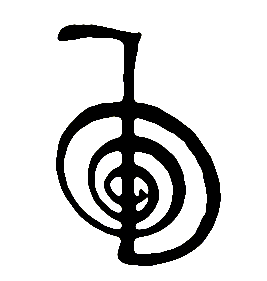
The Power Symbol is traditionally held as a symbol of protection. The tradition describes this protection as a spiritual and psychological sense of being held—a steady feeling of calm—not as a physical force that changes what happens. It is used as a visualization around yourself, your home, or your travels. It is never a substitute for ordinary safety measures.
There are numerous techniques for using Reiki Symbols for protection, and a few of the most popular are below. Throughout, hold them as symbolic visualizations: they do not make travel, property, or children physically safe.
Using Reiki Symbols For Protection
Self-Protection
You can use this whenever you wish; there is no required schedule.
- Either draw a large Power Symbol in front of you and enter it, silently repeating its mantra three times and visualizing it enveloping you and forming a protective barrier around you.
- Alternatively, draw a Power Symbol in front of you and on each side, and imagine drawing one behind you, repeating its mantra three times and intending for it to form a symbolic shield around you. You may also picture a Power Symbol above your head and beneath your feet.
Your Car, Home Or Other Objects You Care About
You can do this whenever you like.
- Draw a large Power Symbol over the object, physically or mentally, while repeating its mantra three times. Then visualize the Power Symbol expanding until it encompasses the object above, below, and on all sides, holding the intention of protecting that object for as long as you wish. If you are not near the object, use the Distant Symbol to establish contact first.
A symbol does not physically protect property. Locks, insurance, and ordinary precautions are what keep an object safe.
When Traveling
- If you know your destination, draw a Distant Symbol discreetly, repeating its mantra three times, and visualize it forming a light bridge connecting you to it.
- Then imagine a large Power Symbol hovering above your car or the bus, train, ship, or aircraft you are travelling in, say its mantra three times, and visualize it spreading to cover the vehicle from above, below, and all sides. Many people describe this as a quiet, calming ritual. You can then visualize a Power Symbol travelling ahead along the Distant Symbol's bridge of light.
This ritual does not make travel safer. Follow normal safety practices and the operator's instructions at all times.
For Children
There may be times when you are not with your children and you wish to hold them in a gentle light. In this tradition, you can use the Distant Symbol and picture a Power Symbol around them.
This concerns them, though, and it should not override their own wishes. Where a child is old enough to understand, ask their permission first and respect their answer. If they do not want it, do not do it for them; simply keep your own reflection and care. Children need challenges for their development, and Reiki is not a substitute for ordinary safety, supervision, and the care of a responsible adult.
These are some of the ways the tradition uses symbols for protection. Hold them as symbolic practices that support a sense of calm, within ordinary safety and consent.
What “Protection” Means In This Tradition
The word protection can suggest a shield that stops harm. In Reiki writing it usually means something quieter: a sense of being held, bounded, and able to settle. Practitioners describe drawing a symbol around themselves as a way of marking a boundary between the demands of the day and their own attention. The image is a container, not armour.
That distinction matters because it keeps the practice honest. A visualization cannot stop a car accident, prevent illness, or keep a person from making a harmful choice. It can, however, be a ritual that helps you pause before a difficult situation. Many people find a brief, familiar gesture useful for that reason, in the same way that a prayer, a breath, or a moment of silence can be.
The tradition also uses protection language for spaces and objects. Here the symbolic meaning is usually about care and intention: marking a home as a place you want to feel calm in. It is not a substitute for locks, insurance, maintenance, or safe storage.
A Simple Daily Protection Practice
If you want a short practice that does not require a full ritual, try this at the start of the day:
- Stand or sit comfortably and take one easy breath.
- Draw the Power Symbol in front of you, at about chest height, and let it be as large as feels natural.
- Say its mantra three times, or simply repeat the name quietly.
- Picture the symbol as a soft boundary around you—not a wall, but the edge of your own space.
- Name one thing you want to carry into the day: patience, attention, courage, or simply the intention to be kind to yourself.
- Let the image fade and return to the room.
At the end of the day, you can repeat the drawing and let it go. A closing gesture can help mark the transition out of work or caregiving. There is no need to check whether the boundary “held” or to look for signs that it failed.
Protection, Consent, And Other People
Protection practices become ethically complicated when they are directed at someone else. A parent may wish to surround a child with light; a practitioner may want to shield a friend from a difficult situation. The intention is usually kind, but the practice still involves another person.
Three questions help:
- Would this person agree if asked? If they are old enough to understand, ask. If they are not, consider whether the practice is for them or for your own anxiety.
- Am I trying to control an outcome? A protection image cannot decide what another person does. If you notice yourself using it to manage their choices, that is a sign to step back.
- Does this replace a practical conversation? Sometimes the most protective act is a boundary, a phone call, or help from a professional. The symbol can accompany that action, but it cannot take its place.
For children, the page above already makes the key point: their wishes matter, and a parent's visualization is not a substitute for supervision or care. The same principle applies to adults who have not asked for the practice.
When The Impulse To Protect Is Practical
Sometimes the wish to protect is a signal that something needs doing. If you feel repeatedly drawn to “shield” a situation, check whether there is an ordinary step you are avoiding: a lock that needs replacing, a conversation that needs having, a medical appointment that needs booking, or a boundary that needs stating.
The symbol can be a prompt to pause and look at the situation clearly. It is not a reason to delay action. If the impulse becomes compulsive—if you feel unable to stop drawing symbols or feel unsafe without them—that is worth discussing with a qualified professional rather than pushing further into the ritual.
Related topic: Reiki symbols, Symbols to support habit change, Psychic awareness with symbols, The Antahkarana symbol, The 3 symbols and their structures.