


Dai Ko Myo is a symbol used in some Reiki lineages, particularly in teachings described as Master-level. Teachers may render its name in English as “great shining light” or use another interpretation. Spelling, pronunciation, form and place in a course can vary. These are lineage teachings, not a single translation or history accepted by every Reiki school.
The 1927 memorial inscription often cited in Usui Reiki histories is available online in English translation. It is useful evidence of what its writers recorded, but it does not independently prove a symbol’s spiritual effects or a Mount Kurama origin story. Read the translation and its provenance.
Where You Can Use The Dai Ko Myo?
Some teachers invite students to draw, visualize or silently name Dai Ko Myo during meditation or Reiki practice. Others teach a particular hand position or course sequence. These are practices within a lineage; the symbol is not established as a treatment, a way to resolve an imbalance, or a tool that guarantees a result. Follow the approach of the school you are studying, or simply use the drawing as a focus for reflection.
Two Versions Of The Dumo (Tibetan Master Symbol)
Dumo is a different symbol from Dai Ko Myo. This older heading groups it with Tibetan Master-symbol material; names and uses vary among schools, and it should not be treated as a second Dai Ko Myo form.
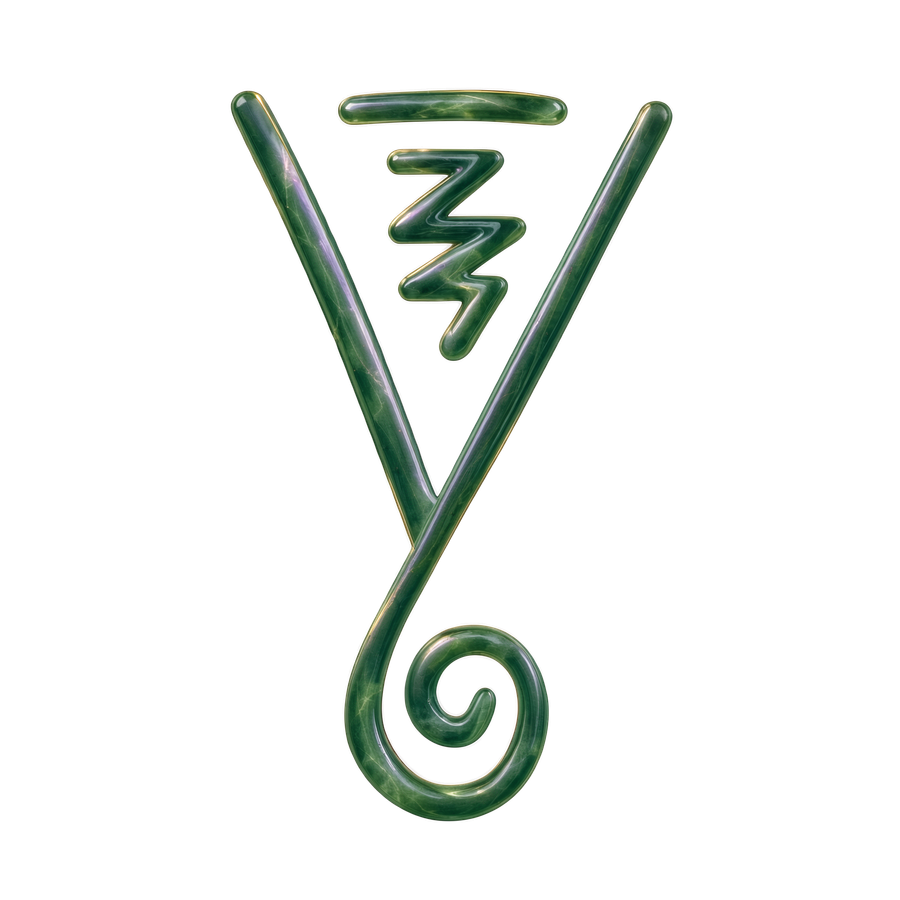
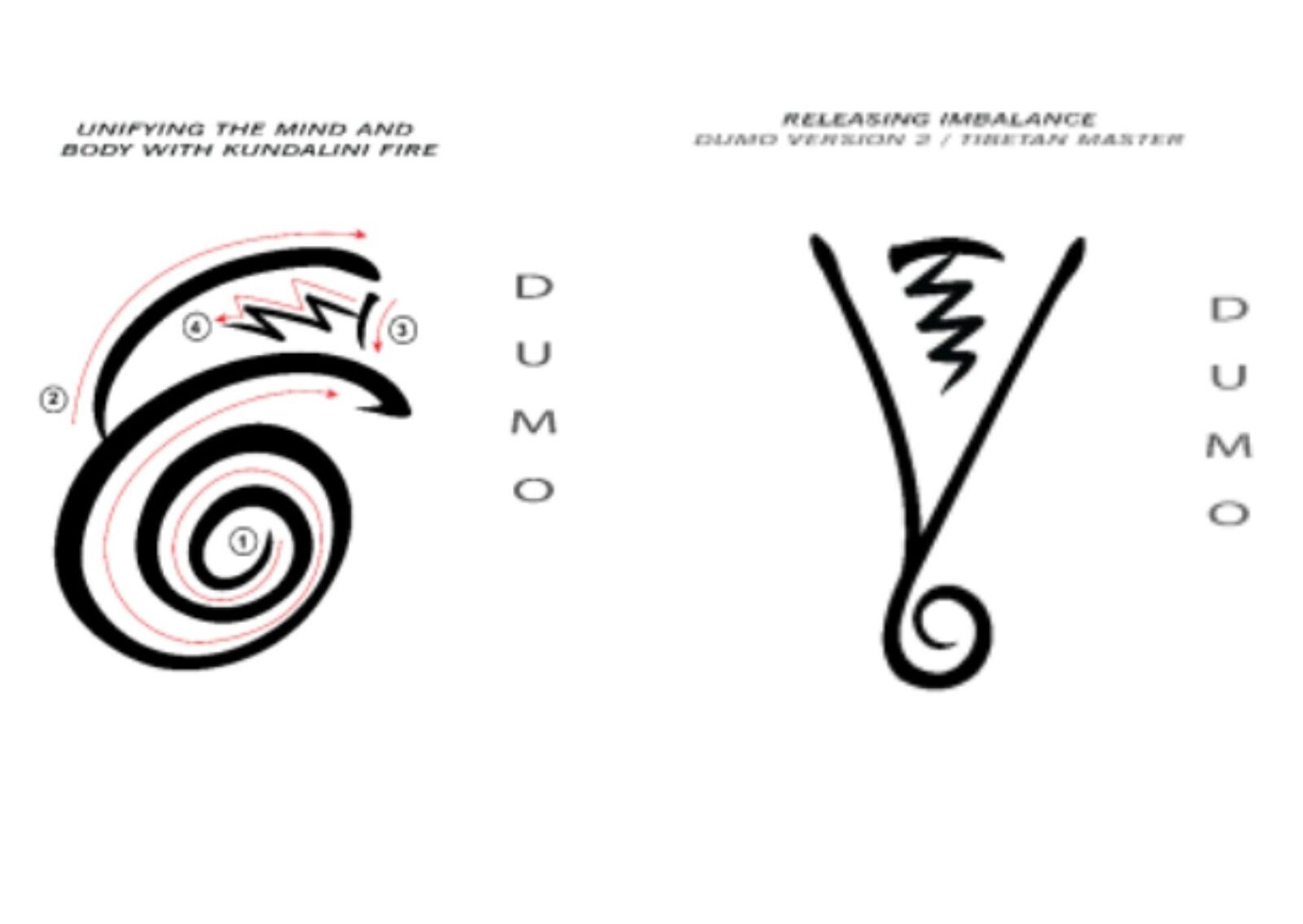
Some lineages associate Dumo with a fire or kundalini image and include it in meditation or attunement practice. Those associations express a school’s spiritual framework. They do not establish that a symbol changes a chakra, cleanses a room, or removes a measurable substance. Dumo is a different symbol from Dai Ko Myo; the Dumo page explains the Tibetan Master-symbol material and why the names should not be merged.
Raku
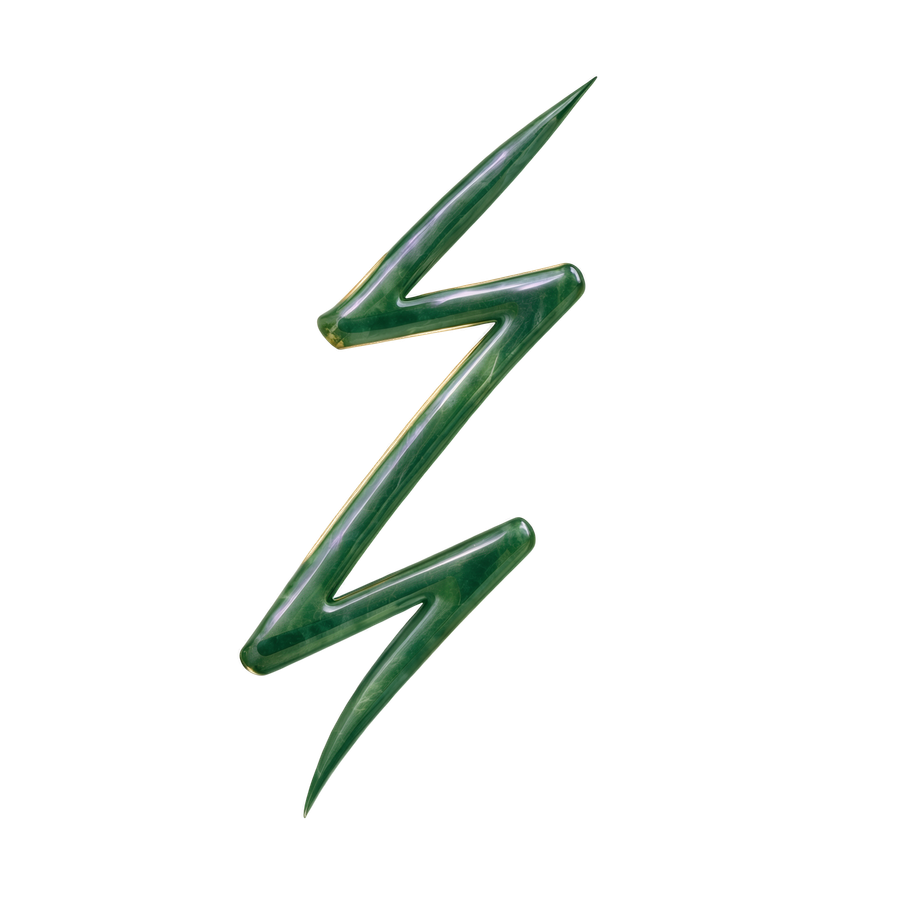
Raku appears in some Reiki teaching materials, including certain teacher or attunement sequences. Its meaning and direction of drawing are lineage-specific. If you are learning it, ask your teacher how it is used and whether the practice is optional.
Conclusion
Symbols can carry meaning within a tradition and can provide a focus for meditation or practice. A person may find a symbol personally meaningful without treating its spiritual interpretation as a demonstrated mechanism. Different schools may use different forms and explanations.
The Reiki Master Symbol: Pronunciation And How To Draw It
“Dai Ko Myo” is commonly used as the name for a Master symbol in some Usui Reiki lineages. Pronunciation guides vary. Teachers may show one or more forms and explain which one their lineage uses; this is a convention of teaching, not a universal authorization rule.
The approved canonical illustration appears earlier on this page. The original source drawing is linked for comparison; it is not presented as a second canonical form. View the original Dai Ko Myo variant
The approved canonical illustration appears earlier on this page. The original drawing steps remain in the preserved manual; the canonical illustration is not a same-form substitute. Open the original Master drawing in the Level 3 manual, page 11
If drawing the symbol is part of your course, follow the version and sequence your teacher explains. Some students use drawing, visualization or silent repetition as a concentration practice. No variant is established as a way to treat illness, change time, manifest an outcome, or affect inherited memories.
The Fourth Symbol: Kanji, Buddha-Nature And Colour
Some Western Usui Reiki teaching describes Dai Ko Myo as a fourth symbol or associates it with Buddha-nature. Other schools place it differently or do not use the same symbol set. “Fourth symbol” and color associations are therefore lineage-specific teaching language, not a universal Reiki syllabus.
The approved canonical illustration appears earlier on this page. The original source drawing is linked for comparison; it is not presented as a second canonical form. View the original Dai Ko Myo drawing
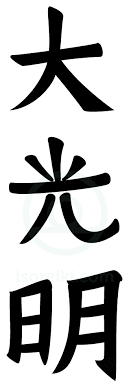
You may use a drawing or color visualization as a personal meditation if it is meaningful to you. It is not a physical safety measure or a substitute for healthcare.
The Name In Three Parts
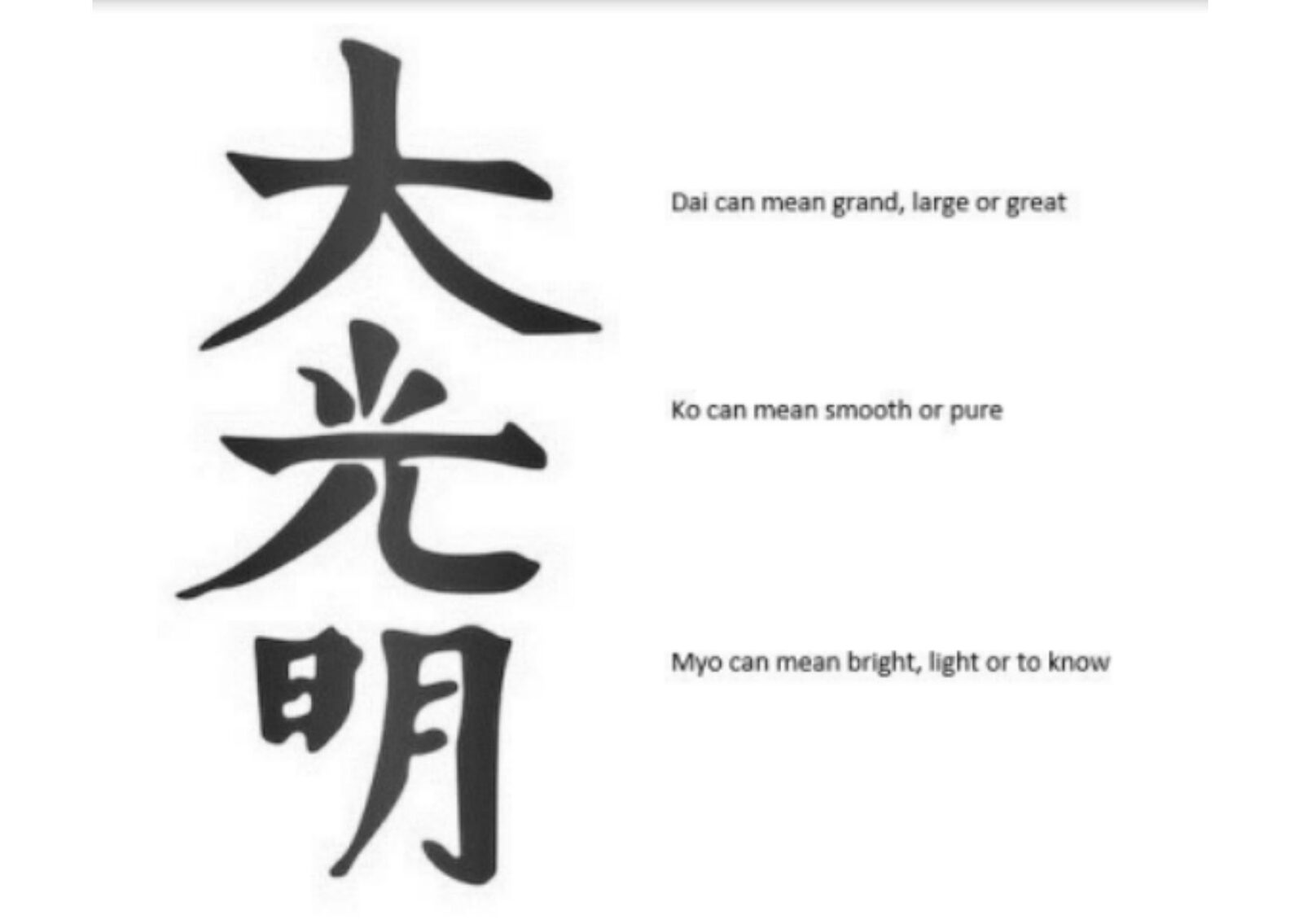
“Dai Ko Myo” is commonly written 大光明 and glossed as “great bright light”: 大 (dai) means great, 光 (kō) refers to light, and 明 (myō in this expression) carries the sense of brightness. The Japan Kanji Aptitude Testing Foundation’s entry for 明 lists its myō reading and meanings relating to brightness and clarity.
A teacher may also give the name a spiritual interpretation. Keep that interpretation distinct from a character-by-character gloss: the meaning a school attaches to a symbol can be richer than a dictionary translation without being the only possible reading.
The name is also a reminder of how Reiki teaching works. A symbol is learned as a form, a sound, and a meaning at once. The meaning is not a secret code that unlocks an effect; it is a way of holding the practice in mind.
Why Versions Differ
There is no single archival drawing of Dai Ko Myo that all Reiki lineages agree on. The symbol became part of Western Reiki teaching through particular teachers and their students, and different branches preserved different forms. Some versions are drawn in Japanese characters; others are more stylized. Some courses teach one form, some teach several, and some place the symbol at a different level entirely.
This is normal for a practice transmitted through teaching relationships rather than a central authority. It also means that comparing drawings online can be confusing. A version that looks unfamiliar is not necessarily wrong; it may simply come from another branch. The useful question is not “which drawing is official?” but “what does my teacher use, and why?”
If you are researching the history, treat claims of an unbroken ancient lineage with caution. The 1927 memorial is a commemorative text, not a symbol manual, and it does not settle the question. Read translations alongside the provenance of the translation, and avoid treating a popular web page as a primary source.
Symbol, Attunement, And Level
Students sometimes confuse the symbol with the attunement. They are different parts of the tradition. The symbol is a drawing and name used in practice. An attunement is a ritual that a teacher performs, in their lineage, to connect a student with the practice. Learning to draw a form does not reproduce an attunement, and receiving an attunement does not automatically make someone a teacher.
Levels are also administrative and lineage-specific. One school's “Master” level may include teaching skills, attunement practice, and a symbol set; another may use the same word for a different combination. A certificate is evidence of completing a course, not a universal licence or a guarantee of ability.
If you are considering a Master-level course, ask what is actually taught: how many symbols, what practice requirements, whether teaching practice is supervised, and what support is available afterward. Those details matter more than the title.
A Short Practice With Dai Ko Myo
If the symbol is part of your course, you can use it as a quiet focus without building a long ritual around it.
- Sit comfortably and let your hands rest.
- Bring the symbol to mind, or look at your course drawing and then set it aside.
- Draw it slowly in the air, or trace it on your palm, saying the name quietly.
- Sit for a few breaths and notice what your attention does. It may settle, wander, or feel ordinary.
- Close by resting your hands and returning to the room.
Some practitioners use the symbol at the beginning of a meditation or as part of a self-treatment sequence. Others rarely use it outside class. Both are acceptable. The practice does not need to produce a sensation, and a quiet session is not a failure.
If you feel drawn to the light imagery, you can picture a soft, steady brightness rather than a dramatic flash. Keep the image gentle and let it fade naturally. The point is to give attention a shape, not to force an experience.
Related topic: Reiki symbols, Symbols to support habit change, Psychic awareness with symbols, The Antahkarana symbol, The 3 symbols and their structures.