


This ten-day guide combines a short Reiki self-practice with optional, gentle acupressure. Each day offers two point choices: Calm and Mood. These labels describe practice themes, not diagnoses. This guide is not intended to treat anxiety or depression. Choose one track, switch between them, or leave out the pressure and follow the Reiki practices alone.
The aim is a manageable daily pause: settle, pay attention and close without trying to force an experience. The Reiki practices progress from grounding and awareness to compassion, gratitude and reflection. No special sensation is required.
How to Use the Ten-Day Guide
- Take one day at a time. Set aside about five to ten minutes, seated or lying comfortably.
- Choose Calm or Mood; you do not need to do both. Read your selected point's entry in the Acupressure Point Reference before using it.
- If comfortable, try light fingertip contact for a few natural breaths, then release and continue with that day's Reiki practice. This is a simple practice rhythm, not a therapeutic dose. Longer or harder pressure is not better.
- For points on both sides of the body, you may use one side or each in turn. There is no need to press two points simultaneously.
- Reiki self-practice can use hands resting lightly on clothing or held nearby. Follow your teacher's approach if you have one. Beginners can use the quiet breathing and reflection without needing symbols or specialist knowledge.
- Missing a day does not undo anything. Resume when convenient; repeat a day if you prefer.
Comfortable contact and safety
Use only light, comfortable fingertip pressure. Stop if contact is painful, or the skin is injured, irritated or swollen. If you are unsure how to locate a point safely, skip the acupressure and use the Reiki practice alone. Do not use needles, tools or objects taped to the skin.
Keep contact especially light around the eye, ear, abdomen and back of the knee; never press the eyeball, enter the ear canal or push deeply behind the knee. During pregnancy, leave out abdominal pressure and the SP6 and LI4 points unless a qualified clinician or practitioner familiar with your situation advises otherwise. Check before pressure if you have a condition or recent surgery that makes it unsuitable.
Reiki and this acupressure guide should not be used to diagnose or treat a medical condition. Continue appropriate healthcare. NCCIH's Reiki overview explains the limits of the health evidence; the MSK patient guide demonstrates comfortable pressure and skin precautions for Yintang. The ten-day routine combines a short Reiki practice with gentle acupressure; the Reiki and acupressure guide explains the relaxation frame.

Acupressure Point Reference
Acupressure uses named locations from traditional Chinese medicine and related point systems. A meridian is a traditional organising framework, not an anatomical tube. The letters below identify that framework; the number identifies a point. The names do not establish a medical effect.
About measurements: a cun is a proportion of the person's body, not an inch or a fixed centimetre length. A thumb-width or four-finger width is only a rough locating aid. Use the landmarks as well as the measurement; the linked location references help distinguish nearby points. The photographs are illustrations, not precise measuring guides.
Each unique point is explained here once. In the daily sections, follow the link back if you need the location again.
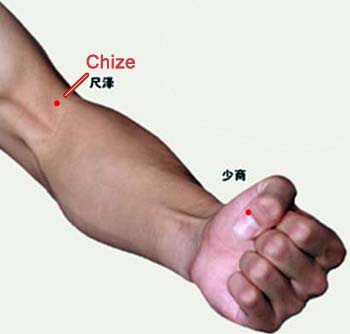
Chize — Chi Ze (LU5)
System and meaning: Lung meridian; a traditional point at the elbow crease.
Where: Bend the elbow slightly, palm upward. Find the firm biceps tendon crossing the front crease. LU5 is in the hollow immediately on its thumb side, on the crease itself. See KMCRIC's LU5 location.
Use here: Rest a fingertip in the hollow with gentle contact, without digging into the tendon.
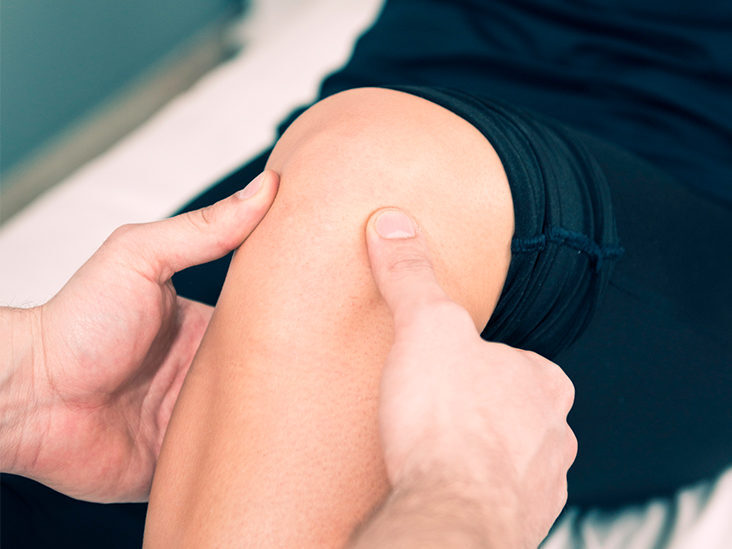
Zusanli — Zu San Li (ST36)
System and meaning: Stomach meridian; a traditional lower-leg point.
Where: On the front of the lower leg, in the muscle just outside the shinbone. The standard location is three body-proportional cun below the hollow beside the outer edge of the kneecap tendon. Roughly four finger-widths below the knee is a starting guide, not an exact measurement. KMCRIC's ST36 reference shows the location on the tibialis anterior muscle.
Use here: With the leg supported, use light fingertip pressure on the muscle, not on the sharp edge of the bone.
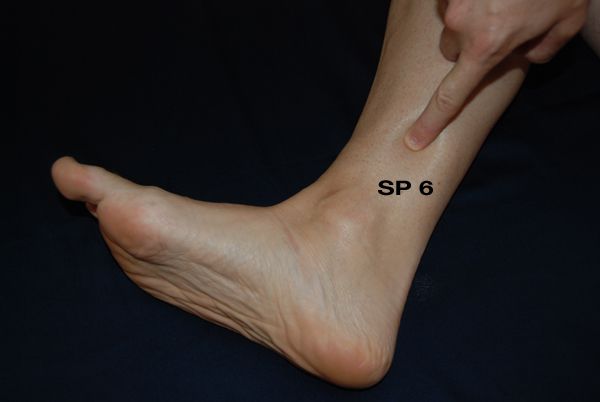
Sanyinjiao — San Yin Jiao (SP6)
System and meaning: Spleen meridian; traditionally described as the meeting of the leg's three yin channels.
Where: On the inside of the lower leg, just behind the inner edge of the shinbone, three body-proportional cun above the highest part of the inner ankle bone. About four finger-widths is an approximate aid. See KMCRIC's SP6 location.
Use here: Support the leg and make light fingertip contact. Pregnancy: leave this point out unless appropriately advised.
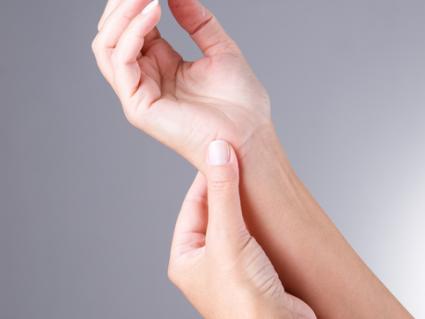
Tongli — Tong Li (HT5)
System and meaning: Heart meridian; a traditional forearm point. “Heart” here names the traditional channel, not a way to assess the heart organ.
Where: Palm upward, find the wrist crease on the little-finger side and the cord-like tendon there. HT5 is one body-proportional cun toward the elbow from the crease, immediately on the thumb side of that tendon. One cun is roughly your own thumb's width; do not measure toward the hand. See KMCRIC's HT5 location.
Use here: Rest the forearm on a cushion and apply gentle fingertip contact beside the tendon.
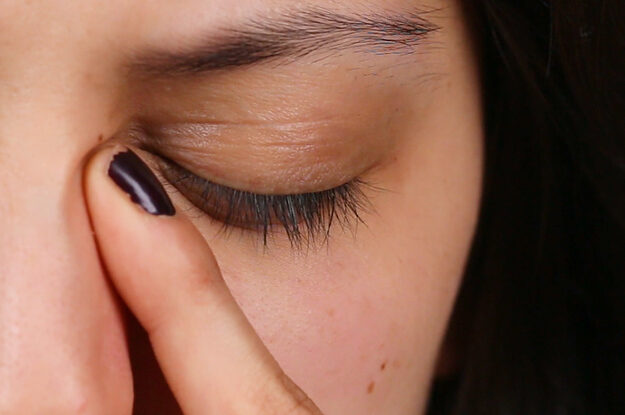
Yintang (EX-HN3)
System and meaning: An extra point of the head, outside the fourteen main channels; traditionally associated with quiet reflection.
Where: On the forehead, halfway between the inner ends of the eyebrows, above the bridge of the nose. MSK calls this point Extra-1; KMCRIC lists it as EX-HN3. “In Tan” is an older rendering of the name.
Use here: Rest one fingertip gently on the forehead at the midpoint. Do not press down on the nose or toward either eye.
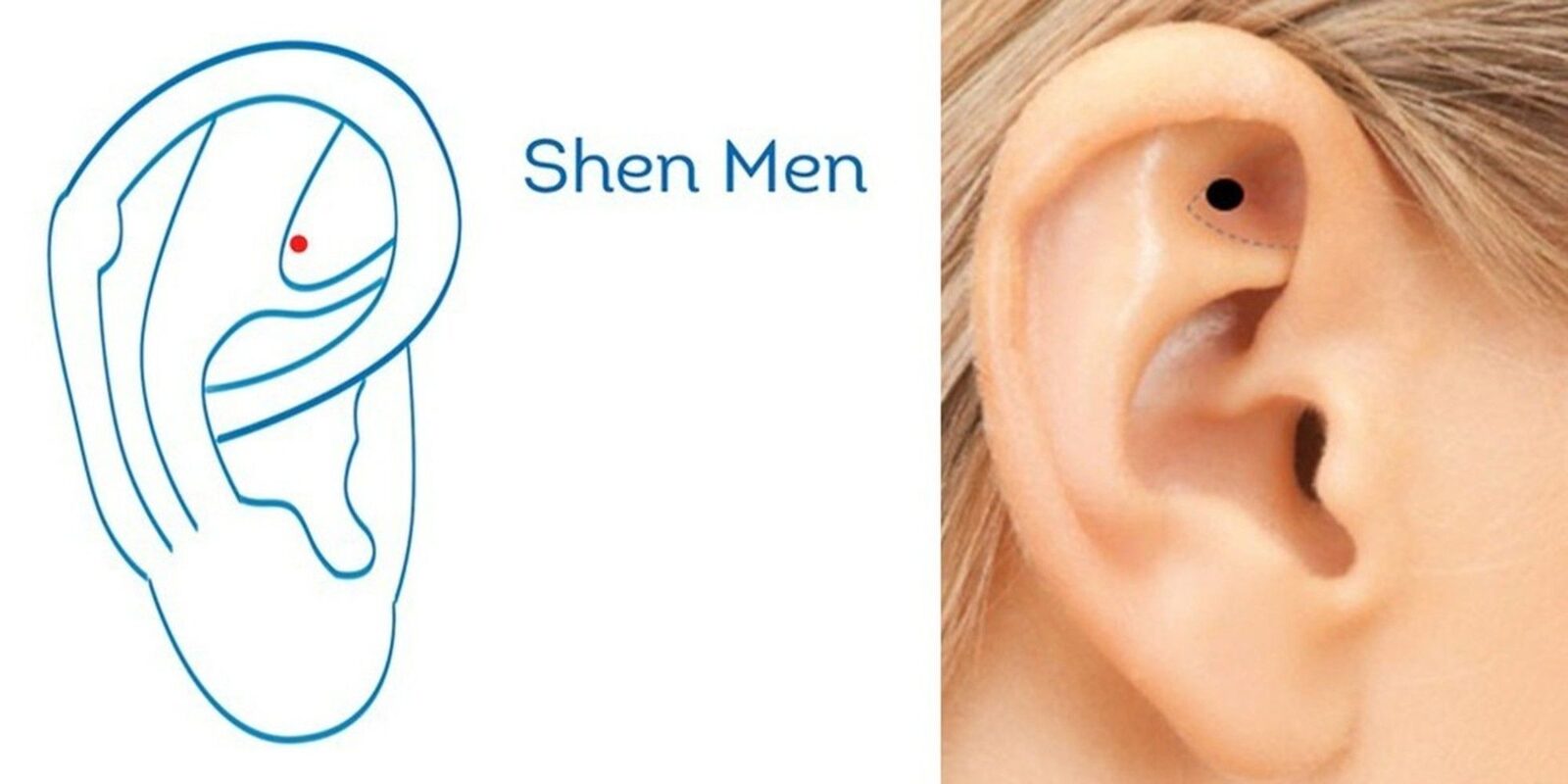
Shenmen — Shen Men (HT7)
System and meaning: Heart meridian; a traditional wrist point. This is the wrist point, not the ear point also called Shenmen.
Where: Palm upward, find the crease on the little-finger side of the wrist. HT7 lies in the small hollow on the thumb side of the prominent tendon, beside the small pea-shaped wrist bone. It is on the crease, unlike HT5 farther up the forearm. See KMCRIC's HT7 location.
Use here: Support the wrist and rest a fingertip lightly in the hollow.
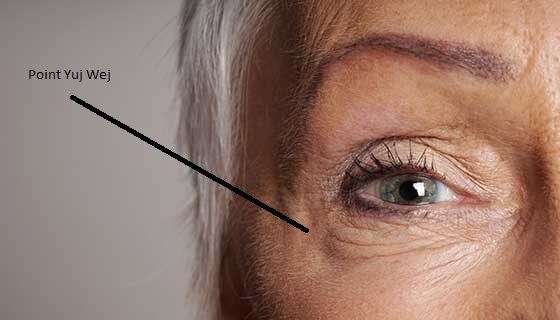
Yuwei — Yu Wei (extra point)
System and meaning: An extra facial point whose name means “fish tail”, referring to the outer eye corner. It is not assigned a main-meridian code here.
Where: On the skin immediately outside the outer corner of the eye. Tom Sintan Wen's Acupuntura Clássica Chinesa describes Yu-Wei about 0.1 cun lateral to that corner, in its extra-points section (illustration and description, PDF page 160). The book's “Ext9” is its own numbering, not a universal point code.
Use here: If comfortable, let a clean fingertip rest feather-light on the skin just outside the corner, without moving the eyelid or pressing inward. Never press the eyeball. Use hands-off Reiki instead if you cannot keep contact clear of the eye.
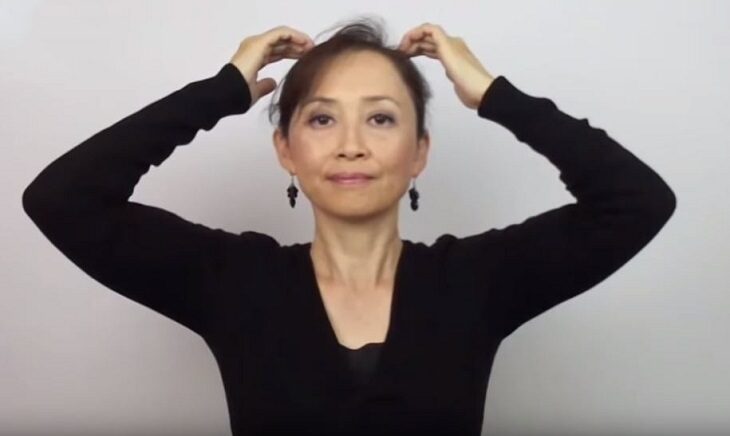
Baihui — Bai Hui (GV20)
System and meaning: Governing Vessel, also called Du Mai; a traditional point on the top of the head. Some references use DU20.
Where: On the head's midline near the crown, approximately where a line joining the highest tips of the ears crosses the midline. The standard measurement is five body-proportional cun behind the front hairline; hairlines vary. See KMCRIC's GV20 location.
Use here: Touch lightly with the finger pads. Do not press a sore or injured scalp.
Guanyuan — Guan Yuan (CV4)
System and meaning: Conception Vessel, also called Ren Mai; a traditional lower-abdominal point. Some references use REN4.
Where: On the body's midline, three body-proportional cun below the navel. In proportional measurement, the navel-to-top-of-pubic-bone distance is five cun, so this is three-fifths of that distance below the navel. See KMCRIC's CV4 location.
Use here: Rest a relaxed fingertip or hand lightly over clothing, without pushing inward. Choose hands-off practice during pregnancy or if abdominal contact is inappropriate.
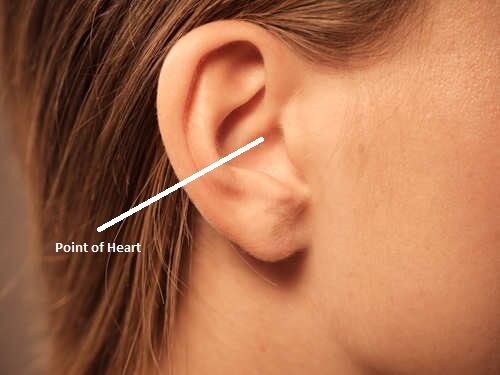
Heart — Xin (auricular point)
System and meaning: Chinese auricular acupuncture, a separate ear-point map. The name is a traditional correspondence, not a diagnosis or direct access to the heart. It is not HT7.
Where: In the central hollow of the lower bowl of the outer ear, called the cavum conchae, just outside the ear canal. The Colorado Chinese Medicine University teaching handout illustrates this location. Ear maps use different numbering, so this guide uses the name rather than assigning a universal code.
Use here: With a clean finger pad, touch the visible outer-ear hollow very lightly. Do not insert a finger, seed or tool into the canal; skip contact if reaching it would require that.
Weizhong — Wei Zhong (BL40)
System and meaning: Bladder meridian; a traditional point at the back of the knee.
Where: At the midpoint of the crease behind a slightly bent knee. See KMCRIC's BL40 location.
Use here: Keep the knee supported and make only very light surface contact. Do not dig into the hollow: important vessels and nerves pass behind the knee. Leave out contact over pain or swelling.
Qubin — Qu Bin (GB7)
System and meaning: Gallbladder meridian; a traditional point at the side of the head.
Where: Level with the top tip of the ear, where that horizontal line meets a vertical line through the back edge of the temple hairline. It is not simply a point directly above the ear. See KMCRIC's GB7 location.
Use here: Rest a fingertip gently against the skin without rubbing hard or pressing a tender area.
Hegu — He Gu (LI4)
System and meaning: Large Intestine meridian; a traditional point on the back of the hand.
Where: In the fleshy area between the thumb and index-finger bones, beside the thumb-facing edge of the midpoint of the index-finger metacarpal. This is on the back of the hand, not the thin free edge of the web. See KMCRIC's LI4 location.
Use here: Support the hand and use gentle fingertip pressure. Pregnancy: leave this point out unless appropriately advised.
Tianjing — Tian Jing (TE10 / SJ10)
System and meaning: Triple Energizer, also called San Jiao; a traditional point behind the elbow. This is a traditional channel name, not an extra organ.
Where: Bend the elbow and find its bony tip. The point is in the hollow one body-proportional cun above that tip, toward the upper arm, not down the forearm. See KMCRIC's TE10 location.
Use here: Support the arm and use light fingertip contact, avoiding direct pressure on the bony tip.
Ten-Day Overview Table
The point names link to the reference above. Choose one point per day, or use Reiki alone.
| Day | Calm point | Mood point | Reiki practice |
|---|---|---|---|
| 1 | Chi Ze (LU5) | Zu San Li (ST36) | Grounding |
| 2 | San Yin Jiao (SP6) | Chi Ze (LU5) | Breathing |
| 3 | Tong Li (HT5) | Yintang (EX-HN3) | Awareness |
| 4 | Shen Men (HT7) | Yuwei (extra point) | Freedom |
| 5 | Bai Hui (GV20) | Heart (ear) | Light |
| 6 | Guan Yuan (CV4) | Qu Bin (GB7) | Rest |
| 7 | Heart (ear) | He Gu (LI4) | Love |
| 8 | Wei Zhong (BL40) | Bai Hui (GV20) | Gratitude |
| 9 | Qu Bin (GB7) | Tong Li (HT5) | Choice |
| 10 | Tian Jing (TE10) | San Yin Jiao (SP6) | Closing |
Day 1 — Grounding and Arriving
Calm point: Chize (LU5). Mood point: Zusanli (ST36).
Reiki practice: Sit with your feet supported. Rest your hands on your thighs or hold them nearby. Notice the support of the chair and floor while breathing naturally.
Today's practice: Begin with a few breaths of light contact at your chosen point, using the reference above. Release, settle your hands and spend a few minutes simply arriving. Close by noticing the room around you.
Day 2 — Quiet Breathing
Calm point: Sanyinjiao (SP6). Mood point: Chize (LU5).
Reiki practice: Rest one hand lightly on the upper chest and the other on the abdomen, or hold them comfortably nearby. Follow the ordinary rise and fall of your breath without making it deeper or slower.
Today's practice: After optional contact at your selected point, let breathing set the pace. Each time attention wanders, return to the next easy breath. Finish whenever you have had enough.
Day 3 — Noticing Without Judging
Calm point: Tongli (HT5). Mood point: Yintang (EX-HN3).
Reiki practice: Hold your hands loosely together or rest them in your lap. Notice warmth, coolness, tingling or no particular sensation. None is a test of your Reiki ability.
Today's practice: Use gentle contact at one selected point, then release. Spend a few minutes observing rather than interpreting sensations. Let them change without trying to create or sustain them.
Day 4 — Making Room: Freedom
Calm point: Shenmen (HT7). Mood point: Yuwei (extra point).
Reiki practice: Choose any comfortable hand position and silently repeat, “For these few minutes, I can pause.” Let thoughts pass without having to solve them.
Today's practice: Start with your chosen point if comfortable; for Yuwei, follow the eye-area caution in its reference. Then settle into self-Reiki. Freedom here means permission to pause, not a claim to remove an emotional or physical blockage.
Day 5 — Gentle Visualisation: Light
Calm point: Baihui (GV20). Mood point: Heart (ear).
Reiki practice: Rest your hands comfortably and, if you enjoy visualisation, picture a soft light around them. You can equally notice ordinary daylight or sit without imagery.
Today's practice: After optional light contact at one point, release and use your preferred image or quiet observation. Treat the light as a spiritual symbol rather than a physical force that changes the body. End by looking around the room.
Day 6 — Resting in the Body
Calm point: Guanyuan (CV4). Mood point: Qubin (GB7).
Reiki practice: Let your hands rest on your thighs. Move your attention slowly from feet to legs, shoulders and face, noticing where support or a position change would make you more comfortable.
Today's practice: Use the selected point lightly, or stay hands-off, then release. Adjust a cushion or relax your hands if useful. There is no need to investigate pain through Reiki; respond to it with ordinary care.
Day 7 — Compassionate Intention: Love
Calm point: Heart (ear). Mood point: Hegu (LI4).
Reiki practice: Rest a hand lightly over your upper chest or in your lap. Offer yourself a simple wish: “May I meet today with kindness.” Let the words be an intention, without expecting a special feeling.
Today's practice: Follow optional contact at your chosen point with a few quiet minutes of self-Reiki. If you bring another person to mind, wish them well without assuming that you can know or change their experience.
Day 8 — Gratitude
Calm point: Weizhong (BL40). Mood point: Baihui (GV20).
Reiki practice: Keep your hands in a comfortable self-Reiki position. Bring to mind one ordinary thing you appreciate: a meal, a conversation or a moment of rest.
Today's practice: If using Weizhong, keep the contact at the surface, as its reference explains. After releasing either point, reflect on your chosen moment. You do not have to turn a difficult day into a positive story.
Day 9 — Listening and Choosing
Calm point: Qubin (GB7). Mood point: Tongli (HT5).
Reiki practice: Rest your hands on or near your shoulders or thighs, wherever they are comfortable. Notice what you want from the next few minutes: quiet, a small stretch, or simply stopping.
Today's practice: Use optional light contact at the selected point, release, and follow your choice. Treat an impression as something to reflect on, not a diagnosis or an instruction you must obey.
Day 10 — Reflection and Closing
Calm point: Tianjing (TE10 / SJ10). Mood point: Sanyinjiao (SP6).
Reiki practice: Choose the hand position you liked most. Spend a few quiet minutes with it, then reflect: Which parts were comfortable? Which would you leave out? Would you like another short practice sometime?
Today's practice: Begin with your chosen point if appropriate, then release and settle. Close by resting your hands, opening your eyes if closed and returning to your day. There is no test to pass and no obligation to repeat the guide.
After the Ten Days
Keep what was useful and leave the rest. You can return to a favourite day, use Reiki alone or take a break. For the foundations, see Reiki Level 1 and Reiki Healing. The breathing exercises and hand exercises offer related practices if you want to explore further.
A Remaining Question
What if I have anxiety or depression?
Seek appropriate healthcare for these conditions. Calm and Mood are labels for two optional practice tracks. Neither the point sequence nor the Reiki reflections are a treatment plan. If symptoms are persistent, distressing or affecting daily life, speak with an appropriate healthcare professional rather than extending or intensifying this practice.
Sources and Further Reading
The point entries link to the relevant location references. The WHO point-location standard and KMCRIC's standard-point database describe traditional terminology and locations, not proof of benefits for this ten-day schedule. Wen's extra-points chapter and the Colorado Chinese Medicine University ear-point handout describe separate point systems. For a taught demonstration, ask a qualified acupressure practitioner; do not substitute force for uncertainty.
Related topic: Treatment and hand positions, Advanced techniques, Alternative techniques in treatment, Alternative ways to use the hands, Techniques to strengthen the mind.