
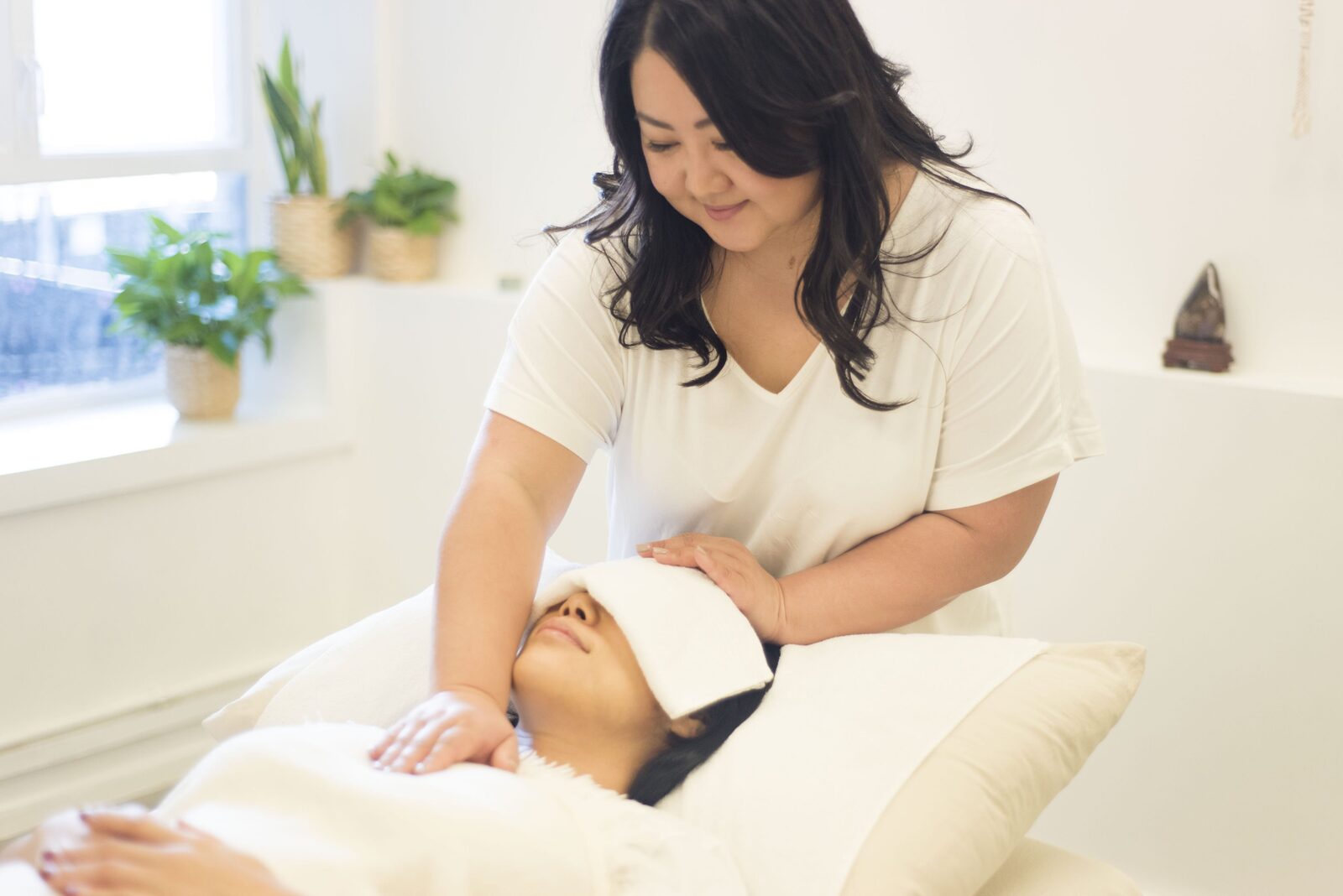
This page describes five techniques named in some Reiki teaching: Koki-ho, Gyoshi-ho, Tanden Chiryo-ho, Heso Chiryo-ho and Nentatsu-ho. They are optional spiritual or reflective practices, not medical treatments or proven ways to transfer energy. Names and steps can vary by lineage. The U.S. National Center for Complementary and Integrative Health says Reiki has not been clearly shown effective for health-related purposes and that scientific evidence does not support the proposed energy field.
When practicing with another person, explain each technique and ask for permission before every touch, breath, close gaze or movement near them. They can choose a hands-off version, a comfortable distance, to skip a technique, pause or withdraw permission. Never blow toward someone's face or body. Do not use a scan or intuition to find illness or decide what treatment is needed.
Koki-Ho
Some Reiki teaching uses Koki-ho for a breath-related visualization.
You may imagine a symbol with your own natural breath. Do not change your breathing to force a result, and do not exhale onto another person. If the practice is part of an attunement, explain it and ask separately before any breath gesture; silent visualization or drawing the symbol in the air is an alternative.
- Sit comfortably and let your breath remain easy. You may imagine a symbol with the breath or omit the imagery.
- Do not breathe toward an injured area, a burn, a face or another person.
- Stop if you feel uncomfortable. A bow or gassho may be used to close if it fits your practice.
Gyoshi-Ho
Gyoshi-ho is described in some Reiki lineages as a gaze or attention practice.
You can soften your gaze or look at a neutral point while reflecting on compassion. Do not stare at a person's body or face without their agreement, and do not present gaze as treatment or as a way to affect a symptom.
- If practicing with someone, explain where you plan to look and ask whether they are comfortable. They can choose self-practice or no gaze.
- Keep attention gentle and brief, or stop whenever you wish. No person needs to feel a particular effect.
- Close with gassho if that is part of your tradition.
Tanden (Tan-Dien) Chiryo-Ho
Some teachings use Tanden Chiryo-ho for an attention practice centered on the lower abdomen. It is not a method for draining toxins, treating the liver or changing a physical system.
- For self-practice, settle comfortably and place a hand on your own abdomen only if that feels comfortable. Hovering or leaving the hands at your sides is fine.
- For another person, do not touch the abdomen unless they specifically request that exact contact. Explain the area and ask separately; keep them clothed and offer a hands-off or skipped position.
- A symbol or quiet reflection may be included as a personal ritual. Do not suggest that it removes chemicals or toxins. There is no special water or cleansing regimen required afterward.
- Finish with gassho or another quiet close if you wish.
Heso Chiryo-Ho
Heso refers to the navel in the terminology used by this practice. Instructions vary, and the navel is not an energy center that needs treatment.
- If you choose to notice your own breath or abdomen, keep your hands to yourself and your breathing comfortable.
- Do not put a finger in another person's navel. Ask before any contact near their abdomen; a hands-off or skipped position is always available.
- There is no pulse or energy sensation that you need to detect. End whenever you wish.
Nentatsu-Ho
Nentatsu-ho is sometimes taught as an intention or affirmation practice. It can be used for personal reflection, not to reprogram another person's subconscious or guarantee a goal.
- Choose a kind, realistic intention for yourself. Do not use affirmations to pressure someone else or imply that illness, weight or life circumstances can be controlled through Reiki.
- Sit or lie comfortably and breathe normally. Eyes may stay open or closed.
- If you choose to place hands on your own brow or head, do so only if comfortable; hovering or no touch is fine. For another person, ask separately before any contact and do not touch their face or head without specific permission.
- You may repeat your words silently or aloud, or skip the affirmation. Stop at any time.
A respectful bow or gassho is an optional closing gesture. No technique here replaces medical care or creates a guaranteed outcome.
How the five compare
The names sound exotic, but the practices ask for fairly ordinary actions: breathing, looking, resting a hand, or repeating a phrase. Seeing them side by side makes it easier to choose one.
| Technique | Main focus | Touch involved? | A simple alternative |
|---|---|---|---|
| Koki-ho | Breath and symbol imagery | None required | Silent visualisation, or ordinary breathing |
| Gyoshi-ho | Soft gaze or attention | None | Looking at a neutral point, or closing the eyes |
| Tanden chiryo-ho | Lower abdomen as a focus | Optional self-touch | Hands in the lap, or attention on the breath |
| Heso chiryo-ho | Navel area as a focus | Optional self-touch | Hands resting on the lower ribs |
| Nentatsu-ho | Intention or affirmation | Optional brow/head contact | Silent phrase with hands in the lap |
None of these is more "advanced" than the others, and none needs to be combined with a symbol to count as practice. If your teacher uses different steps, their version is the one to learn; the table is a map, not a correction.
A short self-practice sequence
If you would like to try the five as one gentle session, keep it to about fifteen minutes:
- Sit comfortably and take a few ordinary breaths.
- Spend two minutes with Koki-ho, letting the breath stay easy and imagining a symbol only if you wish.
- Rest your eyes on a neutral point for a minute, then soften or close them for Gyoshi-ho.
- Place a hand on your own lower abdomen, or leave it in your lap, and sit quietly for two or three minutes.
- Bring attention to the navel area for a minute without pressing.
- Repeat a kind, realistic phrase silently for Nentatsu-ho, such as "I can take the next small step."
- Close with a bow, gassho, or a moment of stillness.
You can leave out any step. The sequence is a way to organise attention, not a protocol that must be completed.
Questions before practising with someone else
Do I need to explain all five? No. Choose one or two and explain exactly what you propose. A long menu can feel like pressure.
What if the person says yes and then goes quiet? Quiet is not consent. Pause and check whether they want to continue, and remind them that a hands-off version is available.
Can these techniques be used on a first meeting? They can, but a first session is usually better kept simple. Establish comfort and boundaries before adding gaze, breath or abdomen-focused practices.
How do they relate to scanning? They are different practices. Scanning, sometimes called Byosen, is its own tradition with its own limits; see Byosen Reikan-Ho and Reiji-Ho. None of these gives a reliable diagnosis.
Related topic: Treatment and hand positions, 10-day treatment with acupressure, Advanced techniques, Alternative ways to use the hands, Techniques to strengthen the mind.