
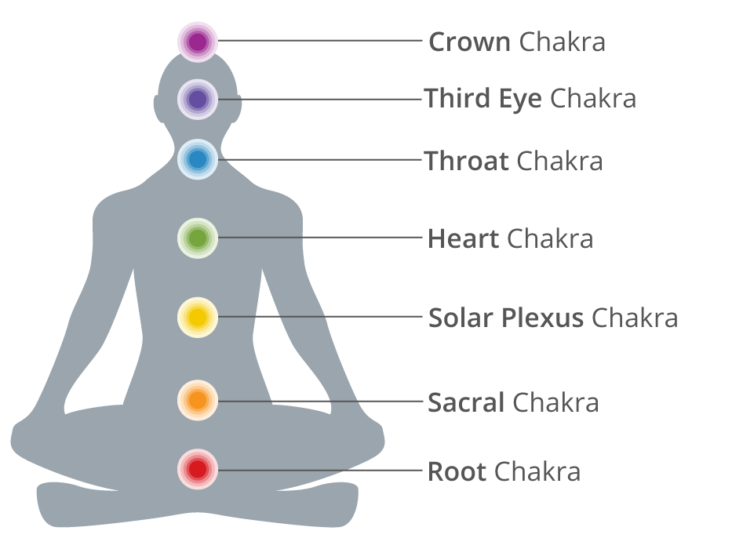
In the popular modern mapping, each chakra is given its own colour and meaning. This is a symbolic system, not a picture of your physical anatomy, and it is worth saying clearly that chakra ideas come from several different traditions and are not a validated way to assess or treat health. What follows is one common seven-colour interpretation; other systems use different numbers, colours and locations.
What Are Chakras?
First, a note on the word. The Sanskrit term "chakra" is commonly translated as "wheel" or "disc".
In yogic and tantric traditions it refers to centres or vortices of subtle energy, described along the spine and connecting mind, body and spirit. In this map they are pictured as spinning wheels of energy. Treat this as spiritual symbolism rather than physical structure.
Different traditions link the chakras to colours, elements, sounds and states of consciousness, and the associations vary.
The 7 Chakra Colors And Their Meanings
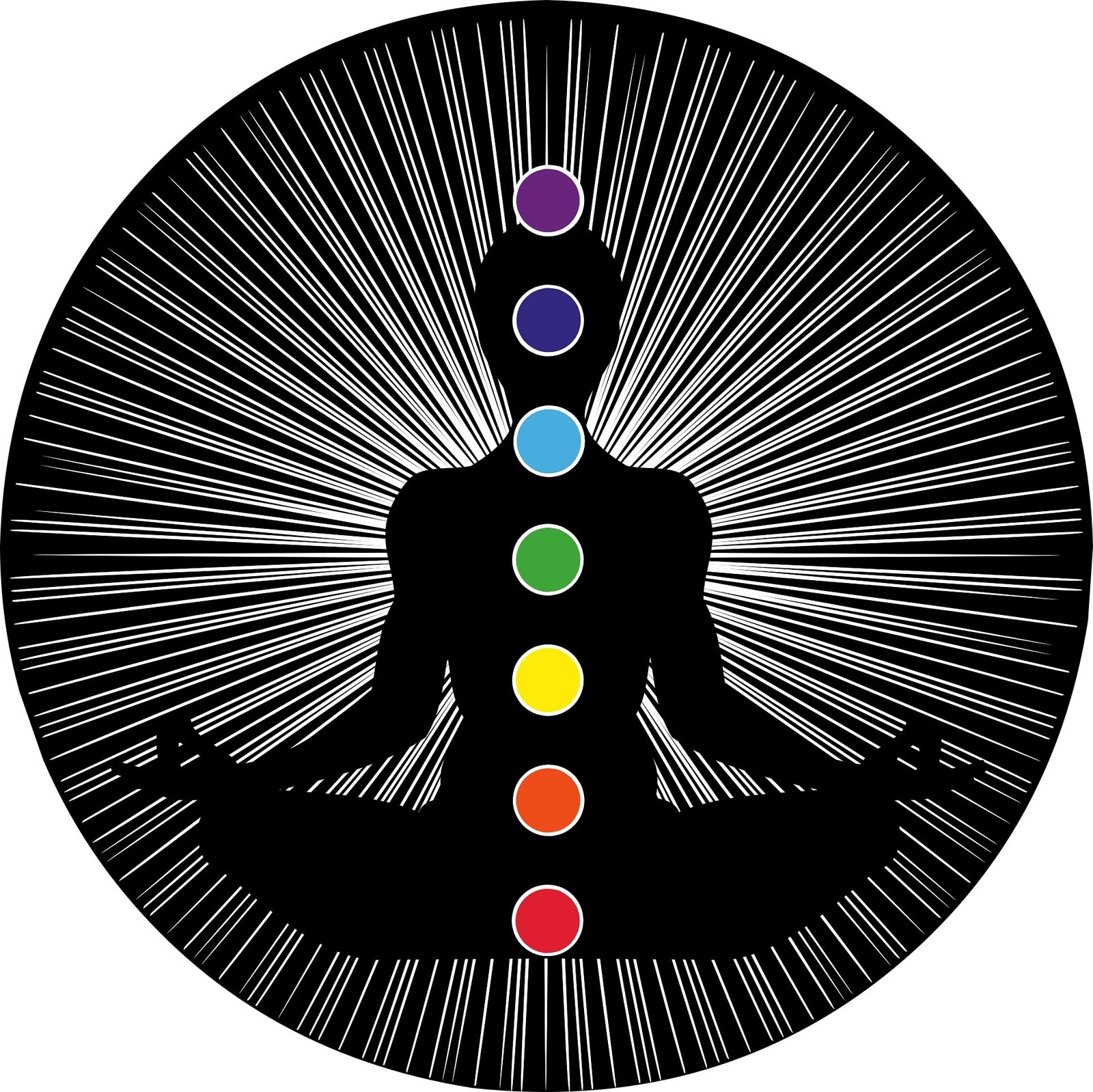
1. The Root Chakra (Muladhara)
- In this map the root provides an anchoring point for the other primary chakras. Its colour is a reminder to slow down, be mindful and feel safe.
- Associated with energy, comfort, stability and safety.
- Located near the tailbone at the base of the spine.
- Hematite, a dark metallic stone, is the stone this map associates with the root. Stones are optional symbols for focused reflection, not remedies.
- Red in color.
2. The Sacral Chakra (Svadisthana)
- In some chakra maps, the sacral centre is associated with creativity and self-worth; orange is its symbolic colour.
- Symbolizes sensuality, pleasure, sexuality, and sociability.
- Located two inches below the navel.
- Tiger's eye is the stone this map associates with the sacral chakra. If you feel a lack of control in your life, practical and professional support helps more than a stone.
- Orange in color.
3. The Solar Plexus Chakra (Manipura)
- In this map the solar plexus chakra sits above the navel and is linked with yellow. Its symbolism is confidence and the ability to act; it does not "boost" anything by itself.
- Symbolizes strength, power, personality, and determination.
- Located at the upper abdomen above the navel.
- People often feel self-doubt as a sensation in the stomach. Amber is the stone this map associates with this centre; it is a focus for reflection, not a cure for self-doubt.
- Yellow in color.
4. The Heart Chakra (Anahata)
- Some traditions associate the heart centre with compassion, forgiveness, empathy, love, and connection; green is its symbolic colour.
- Symbolizes acceptance, compassion, sincerity, and love.
- Located at the center of the chest.
- Rose quartz is the stone this map associates with the heart centre.
- Green in color.
5. The Throat Chakra (Vishuddha)
- In this map the throat chakra is linked with speech and self-expression, and with creative work. It does not "enable" anything by itself.
- Symbolizes communication, creativity, inspiration, and expression.
- Located at the base of the throat.
- Blue lace agate is the stone this map associates with the throat centre.
- Blue in color.
6. The Third Eye Chakra (Ajna)
- In this map the third-eye centre is linked with insight, contemplation and self-awareness. Some systems describe its colour as indigo or violet, while others use red or blue — one reason not to rely on a single colour chart as the only correct one. Terms such as clairvoyance and a "sixth sense" belong to spiritual traditions, not to proven abilities.
- Symbolizes intuition, meditation, trust, and lucidity.
- Located between the eyebrows.
- Amethyst and lapis lazuli are the stones this map associates with the third eye. Sources disagree on whether this centre's colour is indigo, purple or blue.
- Indigo in color.
7. The Crown Chakra (Sahasrara)
- In this map the crown is the most spiritual centre, associated with violet or white. Purple is linked with spirituality and with ideas that inspire awe. The claim that violet's "shorter wavelength and higher frequency" lets it "attract the divine" mixes physics with spiritual belief and is not a scientific statement: wavelength describes light, not consciousness or spiritual access. Regard the crown's colour as symbolism.
- Symbolizes knowledge, fulfillment, spirituality, and consciousness.
- Located at or above the crown of the head.
- Clear quartz is the stone this map associates with the crown, as an optional focus for contemplation.
- Violet or white in color.
Why The Colour Maps Differ
If you compare three chakra charts, you will probably find at least one disagreement. The root may be red or black; the third eye may be indigo, violet, or blue; the crown may be white or purple. These differences are not mistakes. They come from different lineages, different teaching books, and different eras of Western adaptation.
The seven-colour rainbow association is relatively recent and very widespread, but it is not the only system. Some Tantric descriptions use different visual attributes, and some modern teachers assign colours by function rather than by a fixed spectrum. A chart is a teaching aid, not a photograph of something fixed in the body.
That means you can use the chart that helps you remember the centres without treating it as the only correct one. If a teacher gives you a different colour for a centre, follow their system while you are studying with them. You are learning a vocabulary, not verifying a fact.
Working With One Colour At A Time
A whole seven-colour practice can feel like a lot. Working with a single colour for a week is often more useful, and it gives you a chance to notice your own associations rather than reciting a chart.
Choose one centre and its colour. For a week, keep the colour somewhere visible: a notebook cover, a mug, a scarf, a picture, or a flower. Each day, take one minute to look at it and ask a simple question connected to the centre's theme:
- Root (red): What would help me feel more settled today?
- Sacral (orange): What would make room for a little enjoyment or creativity?
- Solar plexus (yellow): Where do I need to make a clear choice?
- Heart (green): Who or what needs a kinder response from me, including myself?
- Throat (blue): What have I been avoiding saying, and to whom?
- Third eye (indigo): What am I not looking at clearly?
- Crown (violet or white): What gives my life a sense of meaning right now?
Write down the first answer that comes, without editing it. At the end of the week, read the notes and see whether a pattern appears. The colour is a reminder, not a cause; the questions are where the value lies.
Questions That Come Up
Do I have to work through the chakras in order? No. The sequence from root to crown is a teaching structure. You can focus on whichever centre feels relevant to your situation.
Can a colour tell me which chakra is “blocked”? No. There is no reliable method for diagnosing a chakra, and a colour you notice in a visualization does not indicate a health problem.
Why do some charts use black for the root? Some traditions associate the root with earth, density, or the colour black rather than red. The difference reflects a different symbolic emphasis, not a different anatomy.
Is it bad to use a colour that is not on the chart? No. Personal associations are part of how colour works. If a particular shade helps you reflect, you can use it alongside the traditional map.
Conclusion
Many people find chakra imagery a meaningful framework for reflection, and that is the best way to use it: as symbolism, not as a map of physical anatomy or a way to diagnose or fix a health problem. If something is worrying you about your health, speak to a qualified professional. If you would like to work with the colours, here is one simple reflection: sit quietly, breathe comfortably, and bring to mind the colour associated with whichever centre you wish to consider — not to change anything, but simply to notice what comes up. You can find more in our article on daily exercises for your chakras.
Related topic: Chakras and aura, Herbs for chakra wellness, Daily chakra exercises, The heart chakra, Detect someone else's aura.