


These optional closing ideas can help a recipient transition out of a quiet Reiki session. Ask what would feel comfortable before offering touch, movement or assistance; a person may decline, choose a no-touch option, or change their mind at any time.
Smoothing The Aura
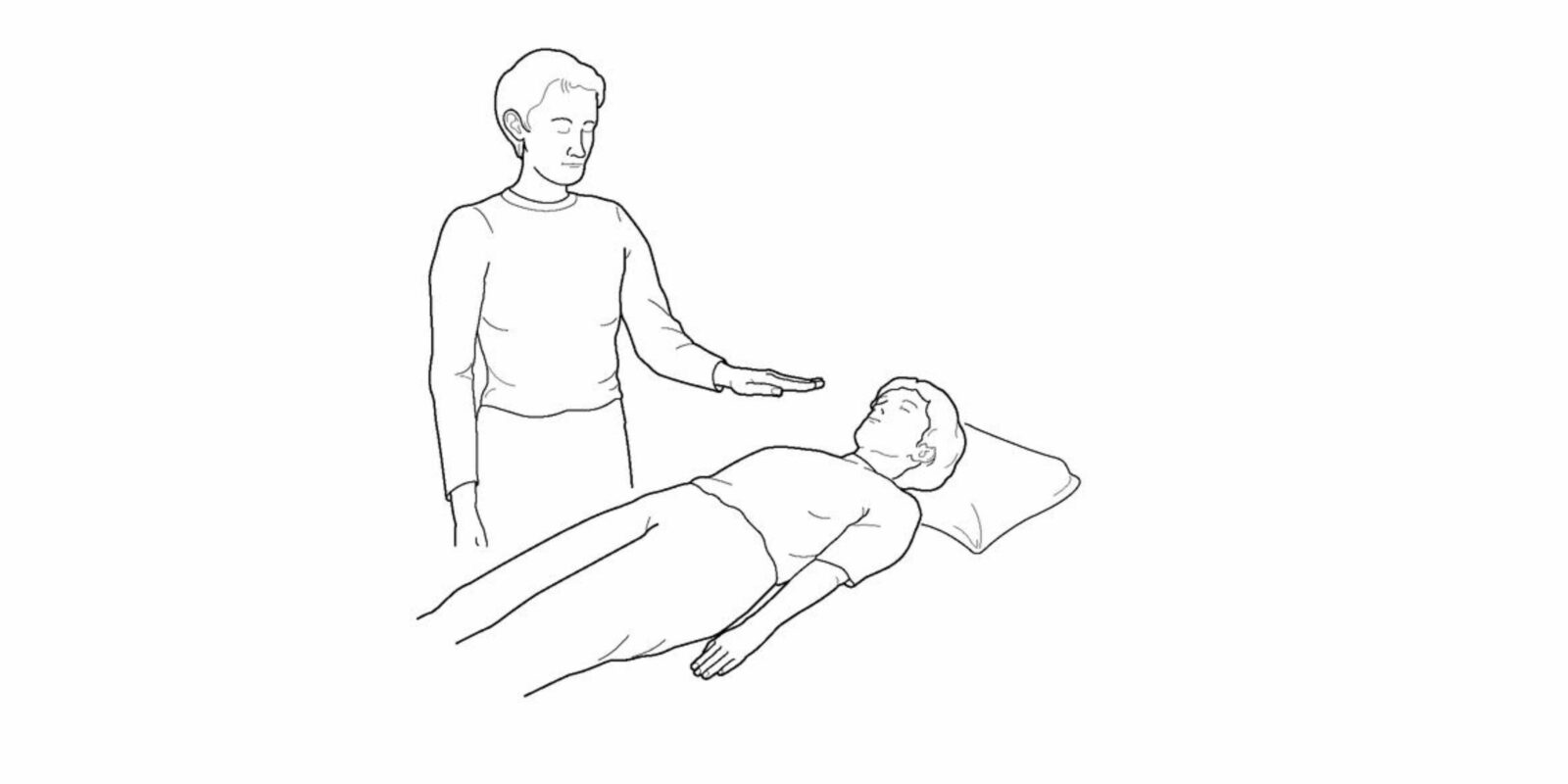
Some practitioners close with a symbolic aura-smoothing gesture. Treat it as a ritual or visualization, not as removing a substance or changing a physical condition. Explain the movement and ask whether the recipient wants you to make it above their body, prefers to do it themselves, or would rather skip it.
If they agree, make a slow, hands-off gesture above the body at a comfortable distance. The direction and number of passes are choices within the ritual; neither direction is known to produce a physical effect.
What Do You Do After A Reiki Session?
Give the recipient time to reorient, and speak softly from a respectful distance. Before touching a shoulder, feet or any other area, ask specifically; they can instead wake at their own pace or sit up without assistance. Offer water as an ordinary refreshment if wanted, not as a Reiki detox or required aftercare. Do not massage someone to rouse them.
Some people want to talk afterward; others prefer quiet. Ask an open, non-leading question such as, "How are you feeling, and would you like anything before we finish?" If you share your own impressions, make clear they are subjective and do not diagnose a condition or identify a cause.
Do not speculate about the causes, messages or lessons of illness. Reiki is not a diagnostic method. If someone describes a symptom or asks for health advice, listen without interpreting it and encourage them to discuss it with an appropriately qualified health professional.
Respect the person's choices and avoid promising that Reiki will heal them. A quiet session may feel restful to some people, but a reaction—or no particular reaction—does not show whether someone is healthy or whether Reiki has worked. New, severe or worrying symptoms should not be explained as an energy response; encourage appropriate medical or mental-health care.
People may reflect on a session later, but do not attribute a new insight, symptom or life event to a Reiki-induced energy shift. Any meaning someone finds is their own, and they can choose whether to discuss it.
If the recipient wants a grounding ritual, invite them to notice their own feet on the floor or take a moment to look around the room. Ask before suggesting any movement; they can remain seated, skip it, or stop. Do not make a person who feels dizzy stand, march or stamp. If unusual drowsiness, confusion, dizziness or another concerning symptom persists, pause the session and encourage appropriate medical assessment.
Afterward, take whatever ordinary pause or self-care feels useful to you. Water, a quiet moment or a personal Reiki reflection are optional; no cleansing routine is required.
A closing checklist
A predictable close helps a recipient feel safe, especially in a first session. You might work through these steps:
- Signal the end. Say quietly, “We're coming to the end of the session,” so the person is not startled by silence ending.
- Finish the last position. Remove your hands slowly, and give the person a moment before you speak again.
- Offer time. Ask whether they would like to stay lying down, sit up slowly, or have a few minutes alone.
- Check comfort. Ask about dizziness, cold, thirst or anything that feels wrong. Do not assume that a quiet person is fine.
- Explain what happens next. Tell them where to find water, when the room is free, and how to contact you afterwards.
- Record briefly. Note the date, what you offered and anything the person asked you to remember.
If the person needs to leave quickly, let them. A closing ritual is not more important than their time or comfort.
Timing and transitions
A session does not have to end at a fixed minute. Some practitioners prefer to finish a position rather than stop mid-way; others stop when the agreed time is up. Either is workable if you explain it. If you are running late, tell the person as soon as you know and offer to shorten the session or adjust the fee, rather than rushing the close. A short session still needs a clear ending; the rapid Reiki treatment includes closing and grounding within its shorter format. A group session needs a clear closing as much as an individual one; the Shuchu and Mawashi guide covers the ending.
For a seated session, the transition back to standing deserves attention. Ask the person to sit for a moment, move their feet, and stand when ready. Do not pull them up or steady them without asking. If they feel unsteady, let them stay seated and offer water.
What to say — and what not to say
A simple close is enough: “Thank you. Take your time. How are you feeling?” If the person asks what you noticed, you can say that you noticed your own impressions, but that they are subjective and not a diagnosis. Avoid statements such as “Your liver felt hot”, “That was a blocked chakra”, or “You released a lot today.” Those sound like findings and can frighten or mislead.
If someone reports a new symptom, do not explain it as a healing reaction. Ask whether they are okay, and encourage them to seek appropriate medical advice if it is concerning. If they are in crisis, follow your safeguarding plan and contact emergency or crisis services.
Recording the close
If you keep notes, record what you actually did: the time, the positions offered, whether touch was used, and any agreement about a follow-up. Keep the person's comments factual and short. Do not write speculative interpretations, and do not keep information you do not need. Tell the person what you record and how it is stored.
Related topic: Treatment and hand positions, 10-day treatment with acupressure, Advanced techniques, Alternative techniques in treatment, Alternative ways to use the hands.