

Quick Correspondences
Chakra systems are a spiritual and symbolic map rather than a description of anatomy or physiology. The correspondences below come from a Western esoteric reading blended with Hindu and Tantric sources; different lineages use different lists, and they are offered here as a contemplative framework rather than as measurable facts.
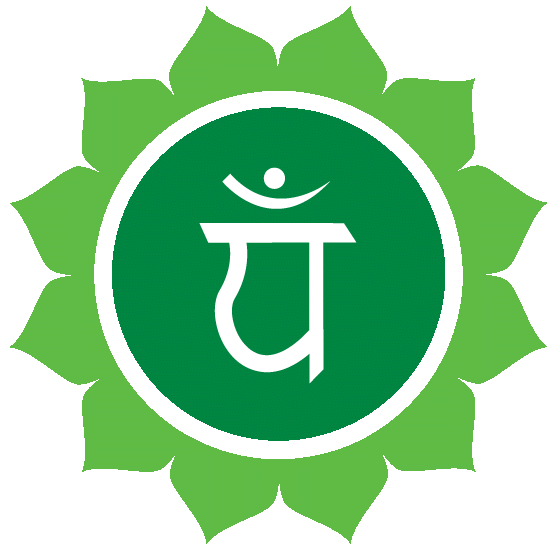
Sanskrit Name: Anahata
Meaning: Unstruck
Body Location: Heart
Glands: Thymus
Element: Air
Function: Love
Seed Sound: Yam
Mantra: I love
Incense: Lavender, Jasmine
Minerals: Rose Quartz, Emerald, Jade
Deities: Vishnu, Aphrodite, Krishna
Archangel: Raphael
Our Heart
In this symbolic map, the Heart Chakra is the middle point between the lower and upper three energy centers. The idea is represented in the geometry of the six-pointed star, with one triangle pointed upwards and the other down; the heart is the median between our earthly needs and what the tradition calls divine consciousness. It is described as a spiritual center uniting the "as above so below" and the "as within so without" ideas, where we move from the microcosm into the macro. Many traditions also describe a balance of receptive and active qualities; when either is overemphasised, the giving and receiving of love can feel out of balance.
This tradition also describes minor chakras in the hands. In its symbolic language, the hands and arms are seen as extensions of the Heart Chakra, with subtle energy said to travel along the meridian lines. The hands are associated with holding close, sharing touch, and making things; this is part of why handmade gifts are called "heartfelt". Many people find that paying attention to the hands and to touch deepens their sense of connection.
Love
The main function of the Heart Chakra is love. The tradition treats this center as the meeting place of many pairings—spirit and matter, Shiva and Shakti, the inner world and the outer world. Love is described as a unifying force that draws things together, breaking separateness and isolation. It is worth distinguishing the love of the Heart Chakra from other kinds: the sexual, lustful, or power-driven love associated with the lower chakras is portrayed as fleeting and surface level, while the love of the Heart Chakra is described as unconditional and abundant. In this framework, a "block" is said to hinder the flow of love. Learning to receive love ourselves is part of being able to give it, and the tradition suggests that a sense of love cannot rest only on what others give us.
The cycle of love is described as giving and receiving: extending love to others while also accepting the love they wish to give. In this framework, difficulty is often described on the receiving side, where people may not allow themselves to receive because they feel undeserving or selfish. The invitation is to stay open: when we close off from receiving, giving can feel harder too.
Healing and Breathing
The Heart Chakra is associated with the element of air, which the tradition links with freedom, lightness, and softness. Air also represents breath. In focusing on the Heart Chakra, practitioners often breathe slowly and deeply, noticing the breath fill the chest. Many find that a calm breathing practice supports a meditative state and a sense of harmony and renewal. In this symbolic language, an open heart is said to let love and compassion flow more freely, and the heart is treated as a source of lessons about what matters most.
Heart Chakra Mantras
- I love
- I love unconditionally
- I have an infinite supply of love
- I am balanced and centered
- I am worthy of love
- I am open to give and receive love
- I choose to unite with all things
Yoga Postures
Movements are optional and should always feel comfortable. Move slowly, keep breathing, and stop if anything hurts or feels wrong. If you are pregnant or have an injury or a health condition, check with a qualified professional before trying a pose.
Chest Opener
Standing, put your arms behind your back and clasp your hands together, rotating your arms so that your elbows point down. This should gently push your chest forward and shoulders back. Keep the neck comfortable—do not throw the head back; keep the chin level or slightly tucked. Only rotate the torso as far as feels comfortable, and stop if you feel any strain. Skip this pose if you have shoulder, neck, or back problems, or check with a qualified professional first.
The Cobra
Lie on your stomach with your hands under your shoulders and elbows close to your body. Keeping your neck long, gently press into your hands to lift your chest a little, only as high as is comfortable. Keep your hips and legs on the floor, then lower slowly. If it feels strained, keep the lift very small or rest on your forearms. Avoid or modify backbends during pregnancy or with back, neck, or wrist injuries.
The Fish
Lie on your back with your knees bent and feet flat, then slide your hands under your hips for support. Gently lift your chest and arch the upper back a little, keeping the weight off the neck; you can place a folded blanket under the upper back instead. Breathe steadily, then lower slowly. Skip this pose if it strains the neck or back.
Related topic: Chakras and aura, Herbs for chakra wellness, Chakra colors, Daily chakra exercises, Detect someone else's aura.