


Crystals are more than the glistening gems you might find in a ring or necklace. In crystal and Reiki traditions they are used as a focus for energy work—a spiritual practice rather than a medical one.
Crystals are not medicine and are not a substitute for medical care.
There is much to discover in working with crystals. Using them alongside your Reiki practice is said, in the tradition, to deepen the energies you already work with.
Crystals are also a pleasant way to develop supportive habits such as yoga and following your intuition, and many people find that working with them supports their own sense of balance. There is a lot to like about these lovely stones.
Here are a few of the things this article covers:
- How crystals are used in the tradition to work with what is described as negative energy.
- Ways to clean and care for crystals, with material-specific cautions.
- Step-by-step guidance for choosing and using your crystals.
- How different crystal colors are interpreted in the tradition.
If you are trying to find calm after a difficult time, feel more grounded, or find more meaning in your life, this guide is for you.
Crystals form in the Earth over long periods, from water, salts, molten rock, and vapour. Ancient cultures, including the Mayans and Egyptians, used stones in ritual and adornment. Today crystals are valued in many spiritual practices—and also, quite separately, in medicines and electronics, where their physical properties are used in very different ways from the energetic traditions described here.
Crystals Teach You to be Grateful for Nature's Never-Ending Bounty
Crystals serve as a physical link to the earth, and a reminder of that relationship, helping many people feel grounded.
These stones have existed for millennia and formed through enormous pressure and time. In the tradition, the energy within a crystal is described as transformed with each passing moment, and the stone is treated as a companion in your practice rather than a source of power over events.
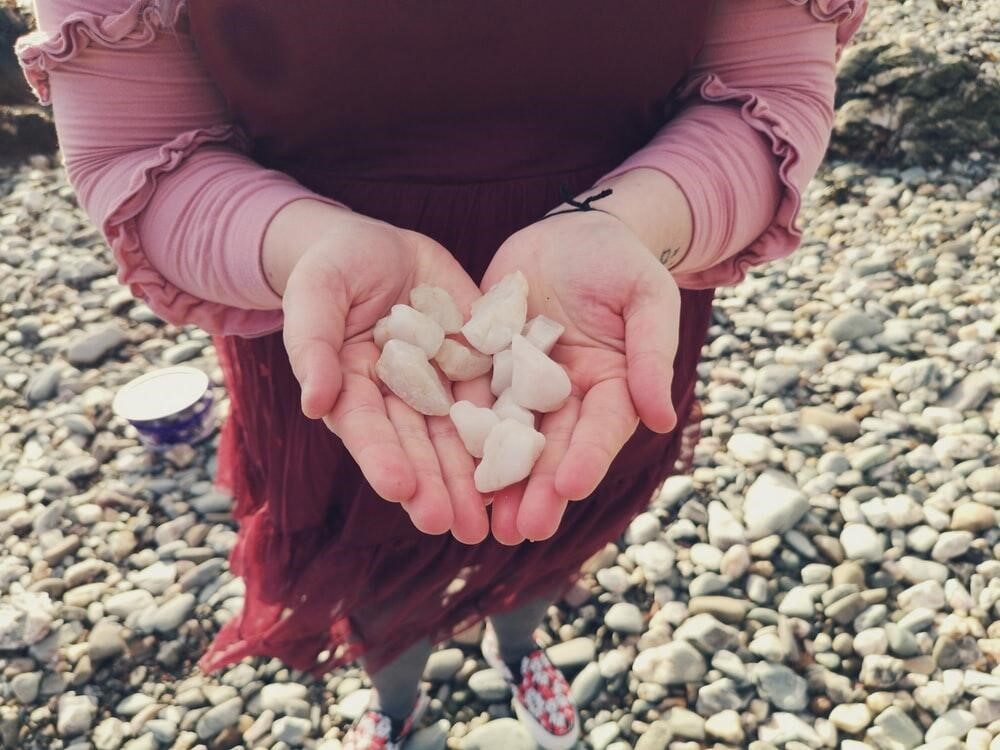
What Role Do Crystals Play in Healing?
In crystal traditions, crystals are described as natural energy sensors. For thousands of years, the tradition holds, these stones have been collecting and storing energy, and that energy is said to support renewal and balance. These are spiritual attributions, not measured effects, and they are not a substitute for medical care.
Crystals are said to help clear what the tradition calls excess or unwanted energy. Clear Quartz, for example, is associated with absorbing negativity from a person, a place, or a situation. It is a symbolic role, not a physical or medical one.
Crystals are also associated with a sense of increased energy. In the tradition, simply being near a crystal is said to bring your own energy into balance—an experiential idea rather than a physical measurement.

This Process is Known as Entrainment
Entrainment is the tradition's name for the idea that when two energetic bodies are close, the lower-frequency body rises to match the higher. Crystals are often used in this way as a focus for positive intention. The claim that crystals take energy from the universe and channel it into the body is part of that belief system, not a scientific finding.
Using crystals to steady the energy field is described as a symbolic method: they are said to absorb unwanted energies to make room for the feelings you want to cultivate.
The rest of this guide covers how to choose, care for, and use crystals in a clear and simple way, so that your practice feels grounded and your own.
Choose the Crystals That Are Most Appropriate for You
Each crystal has its own look and character, and the tradition says each can affect the flow of energy differently, so each one you pick up can feel distinct. Because they come in so many shades, shapes, and finishes, it can be hard to decide. Here are a few suggestions.

The simplest way to choose is to follow your intuition. Many people find that their first reaction is the one that stays with them.
Meditation is another way to decide. Pick up a stone and hold it in your hands with your eyes closed.
Then pay attention to any thoughts, feelings, impulses, or physical sensations that arise. Was your reaction positive or negative?
Everyone's experience differs, but these are some of the signs people describe when a stone feels right:
- You may feel warmth or coolness in your hands.
- Tingling sensations.
- A sense of vitality.
- A feeling of clarity.
- A deep sense of calm.
Colour can also guide your choice, and each colour is traditionally associated with its own qualities—confidence, comfort, calm, and many others.
If you are aware of an area of life you would like to focus on, such as opening your heart to love or finding more relaxation, you can choose stones associated with that quality. Rose Quartz, for example, is traditionally linked with love, and Azurite with peace.
A list of coloured crystals and their traditional associations appears later in this article. Some people also say that the crystal chooses you rather than the other way around.
Any of these approaches can help you decide; pick the one that makes sense to you. If you enjoy a scientific frame of mind, use your judgment. If you have a meditation routine, let that guide you. Once you have your crystal, there is one thing to do before you use it.
It's Time to Clean Your Crystals
Your crystal has been around for a long time, and you may not know where it was before it came to you. It is worth cleaning it when you first receive it, and caring for it regularly after that.
Here are some popular ways to cleanse a crystal in the tradition. Care differs by stone, so check what suits yours.
- One of the simplest methods is to rinse the stone briefly in water and dry it straight away. (Some stones should not be soaked—see the notes below.)
- Use distilled or filtered water if you prefer to avoid the residues in tap water.
- A dry method, such as sound or smoke, is gentler for water-sensitive stones.
Smudging is another traditional way to clear stale energy. It involves burning a sage stick or a similar plant and allowing the smoke to pass over the person, space, or crystal.
Burying a crystal in the earth for a time is another traditional method. If you do this, make a note of where you placed it.
Some stones can be recharged in sunlight or moonlight. Others should be kept out of prolonged direct sunlight, which can fade or discolour them: Amethyst, Amber, Rose Quartz, and many dyed or heat-treated stones are best kept in indirect light or charged by moonlight. Salt water can damage porous stones and metal settings, and some softer minerals—such as selenite, halite (rock salt), malachite, and calcite—should not be soaked at all; dust them gently instead.
Many people find that choosing and cleansing a crystal is only the beginning. The next step is intention.
Choosing Your Intention
In the tradition, a crystal is often paired with an intention. Setting an intention is described as rooting it in your daily thoughts and in your practice.
The idea is that your feelings and attention influence what you move towards in life, and the crystal is said to amplify that focus. It is a way of clarifying what you want to bring your care to, not a way of controlling events.
If you are not sure what your intention is, two questions can help:
- What values matter most to you, and what drives your life?
- What parts of your life would you like to give some gentle attention to?
Be clear with yourself about what you are looking for and why. Any energy practice is deepened by a clear intention.
Perhaps you are looking for more calm, less apprehension, or a habit you would like to leave behind. Perhaps you want to feel more at ease in your body. Whatever your focus, a simple, personal intention is enough.
In the tradition, crystals are said to attract, hold, or release particular kinds of energy. With a clear intention, you can choose how you want to work with yours.
Making Use of the Crystals
If you want to get the most from your crystal, the tradition suggests "programming" it with your intention. The first step is to cleanse the crystal, and to keep it clean.
Hold the crystal in your hands, close your eyes, and let your attention settle. Picture a calm, safe place and, in that state, hold your intention in mind. This is a meditative act: you are setting a direction for your practice rather than changing the crystal's physical nature. Rest there for as long as feels comfortable, then thank the crystal and finish.
Your crystal is now ready to use in your practice.
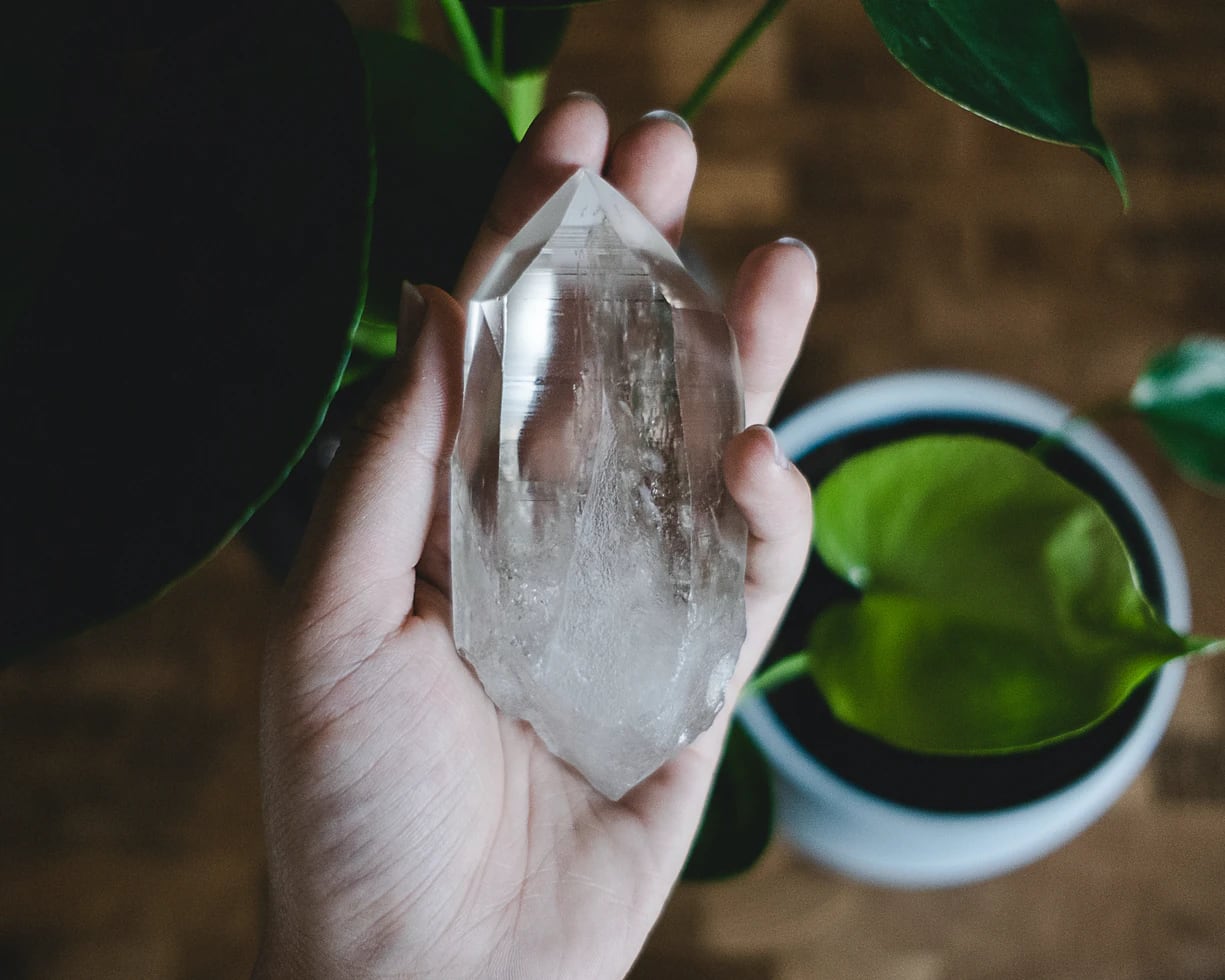
How to Get the Most Out of Your Healing Stones?
There are as many ways to use crystals as there are to use Reiki; your creativity is the only limit. If you are not sure where to begin, here are some traditions to start from. There is no one-size-fits-all approach, and the effect, if any, rests on your own intention and reflection.
Wear the crystals to support your energy
Wearing a crystal is the simplest way to begin. Many people have theirs made into necklaces or bracelets so they can keep them close.
When you first wear a new crystal, you may prefer not to keep it on all day. There is no fixed time, and each person's experience differs. If wearing it feels uncomfortable, remove it; there is no need to wear it or build up time.
Use a Crystal as a Symbolic Touchstone
You can also hold or gently rub a soothing stone on a part of your body. Many people find this a pleasant way to bring a crystal into a moment. Carnelian, for example, is held on the forehead by some before a test or presentation; a blue stone such as Sodalite is placed at the throat before a difficult conversation. These are symbolic aids to calm, not treatments.
Meditate on your soothing crystals
Crystals can also be used as a meditation focus. Hold your crystal in your hand or place it in your meditation space. In the tradition, its energies are said to support you as you settle the mind. Amethyst is a popular choice for meditation, but any crystal will do.
Some people meditate with a red stone such as Ruby before a long day, holding the intention of steadiness. Again, this is a focus for your own attention.

Boost the environment's energy
Many people place crystals in particular spots as a way of setting the tone of a room. A stone near the entrance may be used with the intention of protecting the home; an indigo crystal in the bedroom may be used for a calm atmosphere. These are symbolic placements, not physical protection.
Increase the strength of your Reiki energy
Crystals are often used alongside Reiki. Holding them in your practice space or wearing them during a session is said, in the tradition, to support the flow of Reiki. Both crystals and Reiki practitioners are described as pathways for subtle energy—a symbolic way of speaking, not a physical claim.
Some practitioners like to place crystals on or near a client's body during a session. If you wish to do this, ask the client first, explain what you intend, and respect their answer; never place an object on someone without their consent. Many practitioners prefer to keep crystals in the room rather than on the body. Knowing what the colours are associated with can help you choose.
Different Crystal Colors Have Different Meanings
In the tradition, colours are also said to carry their own qualities. Understanding the traditional meanings can help you choose a stone or set an intention.
Because some crystals come in several colours, it is interesting to compare them—Rose Quartz and Clear Quartz, for example, are used very differently.
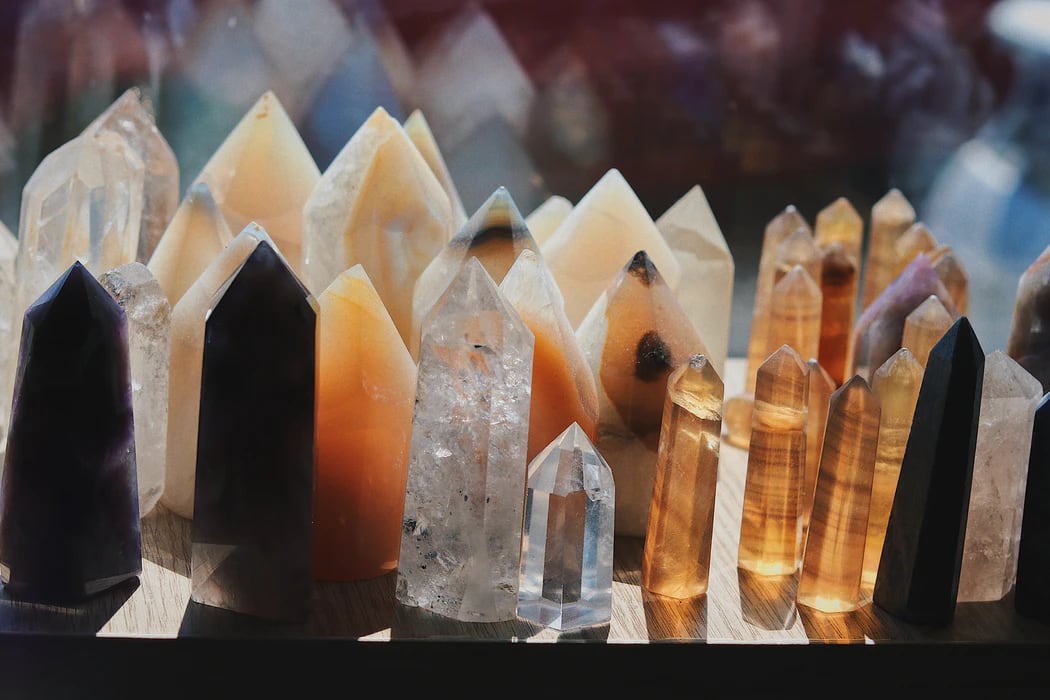
Crystals that are translucent or white
White or translucent crystals are associated with cleansing and purification in the tradition. They are said to absorb negative energy and release it, and their blank appearance is linked with making room for fresh energy. Examples include Selenite, Moonstone, Clear Quartz, and Natrolite. (Selenite should be kept dry.)
Crystals of the color pink
Pink crystals are associated with caring, compassion, and romantic energy—for yourself as much as for others. Examples include Rose Quartz, Rhodonite, Morganite, and Kunzite.
Crystals with a reddish hue
Red crystals are widely used in jewellery and are linked with passion, inspiration, and warmth. Examples include Ruby, Red Jasper, Garnet, and Fire Agate.
Orange-colored crystals
Orange crystals are associated with letting go of what no longer helps you, with both soothing and energising qualities. Examples include Carnelian, Copper, Sunstone, and Aragonite.
Yellow crystals are crystals that have a yellow tint
Yellow crystals are linked with organisation and working with change. Many people use them as a focus when adjusting a routine. Examples include Amber, Yellow Citrine, Mookaite, and Gaspeite.
Green crystals are crystals that have a green tint
Green crystals are associated with balance and with redirecting energy in a harmonious way. Examples include Emerald, Jade, Malachite, and Green Aventurine.
Crystals in the color blue
Blue stones are linked with honesty and open expression. Examples include Sodalite, Sapphire, Angelite, and Blue Topaz.
Indigo Crystals
Indigo crystals, which resemble the night sky, are associated with calm and a deep sense of peace. Examples include Lapis Lazuli, Kyanite, Azurite, and Indigo Gabbro.
Violet Crystals
Violet or purple crystals are linked with the spiritual side of practice and with contemplation. Examples include Amethyst, Sugilite, Iolite, and Violet Flame Opal.
Black Crystals
Black crystals are associated with grounding and protection in the tradition. They are often placed in a home with the intention of absorbing or repelling what is described as negative energy. Examples include Obsidian, Apache Tears, Tourmaline, and Shungite.
Brown crystals
Brown crystals, the colour of the earth, are associated with stability, grounding, and a connection to nature—useful as a focus when life feels unsettled. Examples include Tiger's Eye, Halite, Smoky Quartz, and Bronzite.
All of these crystals are available in a number of colours. Follow your intuition about the colour you are drawn to, and let the crystal support your own reflection and renewal. For all the appeal of crystal practice, Reiki remains a complete tradition in its own right.
Notes On Some Common Crystals
Traditional Reiki does not include crystals; however, many Reiki Masters and Practitioners find that crystals enhance Reiki practice in practical and aesthetic ways. Each crystal is described as having its own vibratory and energy-balancing quality, and practitioners describe Reiki deepening that harmony as the stone is held in the practice.
Clear Quartz
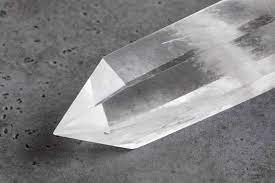
Clear Quartz is the most versatile crystal in terms of programming. In the tradition it is used to work with the chakras and to clear what is described as negativity from the body and the environment, by receiving, activating, storing, amplifying, and transmitting energy. It is also said to open the inner sight and deepen your connection with your higher self, and it can be used as a focus on any part of the body. It is not a medical tool.
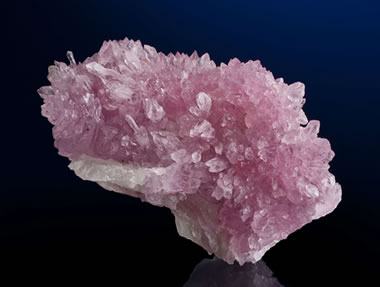
Rose Quartz
The "love stone" is associated with forgiveness and compassion, and with letting go of resentment, guilt, fear, and jealousy. Many people find it supports a gentler appreciation of their own individuality.
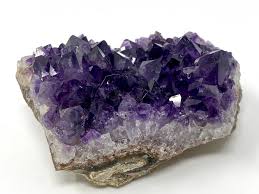
Amethyst
Amethyst is known as "the elevator" in some traditions and is a popular stone for spiritual contemplation, associated with dispelling illusion and inviting inspiration and intuition. It is also traditionally linked with balance and a sense of vitality. It is a wellbeing practice, not a medical treatment.
While some crystals remain natural, others have been sculpted or polished. The shape is not essential, but pyramids, spheres, and wands are often found useful because they are said to concentrate energy most efficiently—a symbolic idea rather than a measured one.
Cleansing And Programming Crystals With Reiki
When you first bring crystals home, it is worth washing them carefully—if the stone is water-safe—or dusting them gently. They are said to collect energy, and you may not know what they were exposed to before your purchase. Ways to cleanse crystals include rinsing briefly (not soaking) and drying naturally, dry methods such as sound or smoke, and gentle moonlight. Avoid prolonged sunlight and saltwater, which can fade or damage many stones and settings.
You can also incorporate Reiki. Hold the crystal in your hands or draw the Power Symbol over it, repeat the chant three times, and hold the intention that the crystal be cleansed. To "empower and program" your crystals after they are cleansed, pick up each one and trace the three Reiki symbols over it, chanting their mantras and holding the intention that it be filled with Reiki. In the tradition, this energy is said to be stored within the crystal, ready to support your practice. It is a symbolic ritual, not a physical charge.
You can carry a crystal with you or give it to another person. During a Reiki treatment, some practitioners like to place charged crystals near or on a client's chakras. If you wish to try this, ask the client first and confirm they are comfortable, and remove the crystals before smoothing the aura. You can also write down a concern on a piece of paper and lay it beneath a programmed crystal, holding the intention that Reiki flows into the concern. It is worth cleansing and reprogramming the crystal regularly to keep the practice fresh.
Related topic: Crystals, Chakra crystal necklaces, Crystal grids, Crystals and health, Clear quartz.