
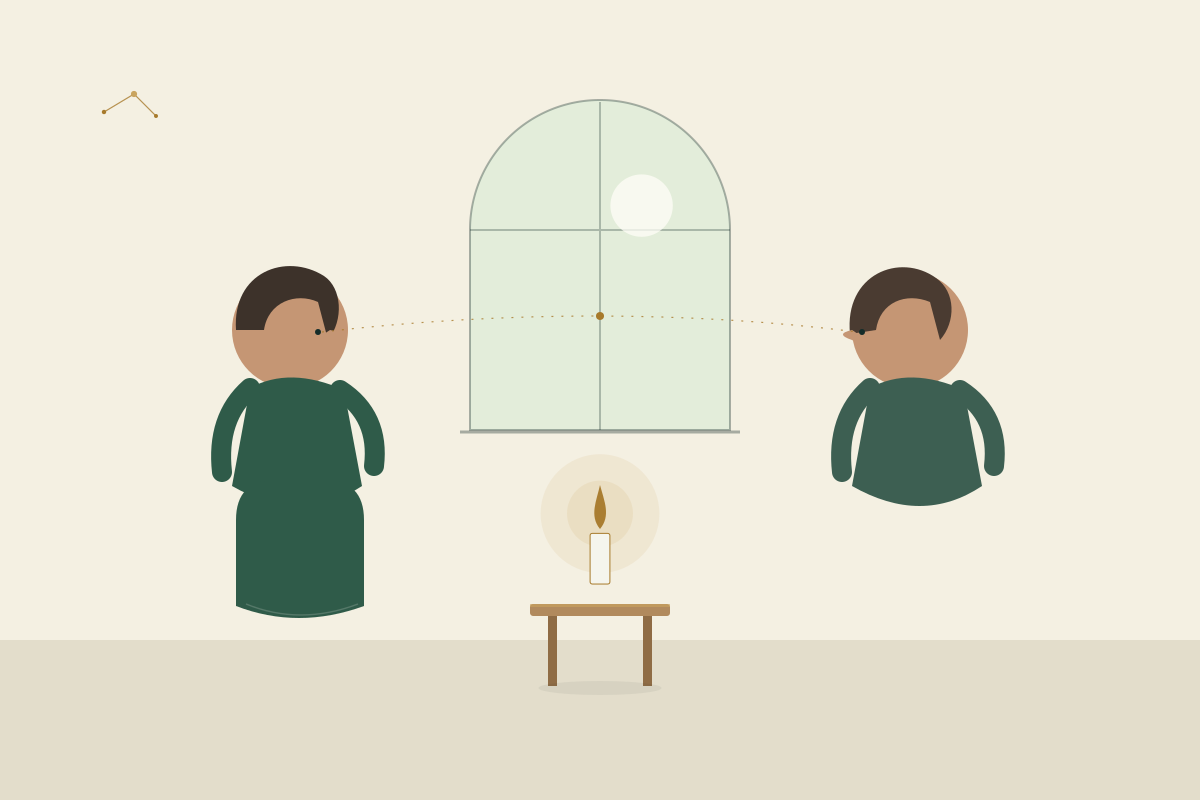
Gyoshi Ho (凝視法) is the Reiki method of directing attention through the eyes. The Japanese term combines gyōshi (gazing, fixing the eyes on something) with hō (method). In English it is often called the “eye method,” “gaze healing” or “Reiki with the eyes.”
The name can sound more dramatic than the practice. In the Japanese-lineage material, Gyoshi Ho is usually a soft, settled gaze rather than a stare, and it is used within a wider Reiki practice. It is not a beam of measurable energy, a way to diagnose illness, or a substitute for touch, medicine or mental-health care.
What Gyoshi Ho is
Gyoshi Ho is a way of offering Reiki attention when the hands are not the main channel. The practitioner settles the body and mind, brings a compassionate attention to the person or area, and lets the gaze rest there softly. The eyes are not strained, and the practitioner is not trying to “push” anything.
James Deacon’s account places Gyoshi Ho among alternatives to direct contact, including situations where touch or close proximity would be uncomfortable or inappropriate. The instructions emphasize a relaxed, de-focused gaze and heart-felt compassion rather than a hard stare (AETW, Gyoshi Ho). That framing is useful, but it is one recorded version. Other teachers may use the term for a brief gaze at the start of a session, for distance practice, or for a specific area of the body.
The International House of Reiki’s list of methods practiced in the Usui Reiki Ryoho Gakkai tradition includes “Koki ho & Gyoshi-ho” among the techniques taught in that line (IHREIKI, How Japanese is Gendai Reiki-Ho?). The pairing is significant: breath and gaze are both described as ways of extending Reiki attention beyond the hands. Neither is a medical procedure.
Why a gaze method exists
Reiki is usually taught as a hands-on or hands-near practice. A gaze method gives the practitioner another option when touch is unwanted, painful, culturally inappropriate or simply not possible. It can also be used at a short distance, with the recipient’s agreement, when both people prefer not to be physically close.
That does not mean Gyoshi Ho is “safer” by default. Being looked at can be intense. Some people find eye contact comforting; others find it intrusive, especially after trauma, during grief, or in a clinical setting. The method therefore depends on consent and on the practitioner’s ability to read a room without making the recipient responsible for managing the practitioner’s feelings.
The practice in outline
A conservative version looks like this:
- Agree on the frame. Say what you are offering, how long it will last, and that the recipient can stop at any time. Ask whether they prefer eye contact, a gaze toward the shoulder or another neutral area, or no gaze at all.
- Settle yourself first. Sit or stand comfortably. Let the breath become natural. Bring the attention to the lower abdomen or the hands, as in Seishin Toitsu.
- Soften the eyes. Look toward the person or area without fixing on a single point. Allow the peripheral field to widen. The gaze should feel comfortable to you; if your eyes water or your forehead tightens, you are trying too hard.
- Hold a simple intention. In Reiki language, the intention is usually compassionate presence rather than a specific outcome. Do not mentally recite a diagnosis or command.
- Keep it short. Two or three minutes is enough for a first practice. Silence is fine. If the recipient becomes tearful, agitated or uncomfortable, pause and check in.
- Close and step back. End clearly. Ask what the person noticed without interpreting it for them.
The practice can be done without any hand movement at all, or with the hands resting quietly in the lap. It can also be combined with a hands-near treatment, but the gaze should not become a substitute for clear communication.
Consent, trauma and boundaries
Gyoshi Ho is not appropriate as a surprise. A practitioner should not stare at someone who has not agreed to a Reiki session, including a sleeping person, a child, an animal or a person who cannot consent. In a therapeutic or care setting, follow the setting’s policy and the person’s care plan.
Additional boundaries:
- Do not use the gaze to “scan” for illness. A practitioner cannot see a tumour, an infection or a “blocked chakra” with the eyes. Doing so can frighten people and delay care.
- Do not insist on eye contact. A gaze toward the shoulder, hands or general area is enough. Eye contact can be overwhelming for autistic people, trauma survivors and people in acute distress.
- Stop if the recipient withdraws. A frown, a turn of the head, a change in breathing or a verbal “no” all count.
- Be careful with children and animals. They cannot always understand or refuse the frame. A parent or guardian may consent, but the child’s discomfort still matters.
What the gaze is not
Gyoshi Ho is sometimes described as sending energy through the eyes or “scanning the aura.” Those are imaginative ways of talking about attention, not established physiology; there is no scientific evidence that the eyes emit a healing field. Reiki has not been clearly shown to be effective for any health purpose (NCCIH, Reiki). A calm gaze can be a meaningful human interaction, but it is not a diagnostic tool or a replacement for care.
How to learn it
Gyoshi Ho is best learned with feedback. A teacher can show you how to soften the gaze, how to sit without strain, and how to end a session cleanly. If you are studying Reiki at Level 2 or beyond, ask whether Gyoshi Ho is part of your line’s syllabus; some schools teach it alongside Koki Ho, the breath method, and Nentatsu Ho, the intention method.
For the wider set of Japanese techniques, see the treatment hub. If you are new to practice, Reiki Level 1 and Reiki Healing cover the foundations. If you plan to offer Reiki to others, read Reiki Level 2 for the distance and symbol material taught in many lineages, and the ten-day sequence is a practice sequence, not a treatment protocol.
Related topic: Treatment and hand positions, 10-day treatment with acupressure, Advanced techniques, Alternative techniques in treatment, Alternative ways to use the hands.