


Before offering someone a full Reiki session, many lineages suggest completing your own period of self-practice and self-treatment first; follow your teacher's guidance. Once you are ready, remember that anyone you treat should be met in a warm, safe and supportive setting, and that you should behave professionally even if you know them well. Prepare yourself and the space before the session begins.
What Preparations Should Be Done During The Reiki Session?
Personal Preparation
This sequence combines ordinary cleanliness with optional protection and cleansing visualizations. Different teachers use different preparation rituals; the sequence below is one approach, rather than a documented account of Usui's original procedures.
Self-Cleansing
The most important thing you can do for yourself and your client's comfort is focus on your cleanliness. After washing your hands (and possibly brushing your teeth), you should also ensure that your clothes are clean and fresh before treating anyone. Be considerate about scent and personal hygiene when working close to another person. Metal jewellery can catch on clothing, so you may prefer to remove it; the choice is yours.
Energetic Protection
To protect oneself energetically and psychically, the tradition teaches that this practice of self-protection begins after a Reiki attunement.
The simplest way is to envision your aura as a Reiki-filled eggshell with a translucent outer edge. Pretend Reiki is coming from your hands, filling the eggshell with healing white light. In the tradition, the Reiki is described as cleansing the aura so that only love, light and Reiki can enter. This is a visualization, not a physical barrier.
Because your client is in your auric field during the treatment, it is traditionally believed that Reiki protects both you and your client. In this understanding, difficult energies are said to be transformed by the Reiki. Treat this as a belief, and do not use it to imply that a client's problems are the result of "negative energy". You can generate a protective energy field around yourself at any time, not only before receiving a Reiki treatment. Before a session, the client decides what to remove or keep on; the leg-pain guide applies the same comfort-first rule to leg work.
Preparing The Space
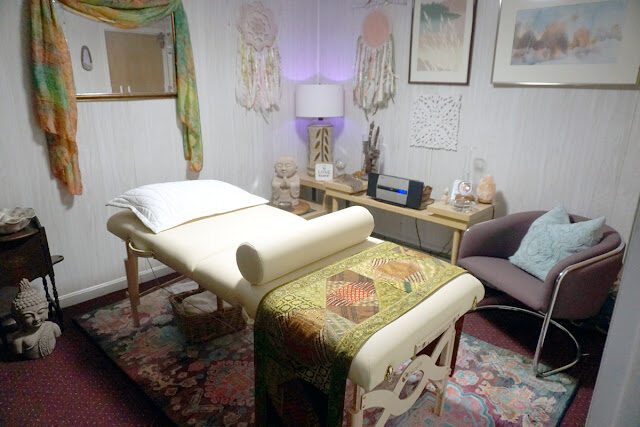
Use a clean, tidy room. If it fits your lineage, you may imagine Reiki cleansing the space as a spiritual visualization; treat this as a ritual, not a substitute for ordinary cleaning. You might picture a delicate white mist moving around the space, especially the corners.
Prepare the treatment couch, clean cushions and a blanket. A scent-free room is a simple default, especially where someone has allergies or dislikes fragrance; incense and essential oils are optional and should only be considered with their agreement and appropriate ventilation and fire precautions. If the client wants music, prepare a playlist or other recording and check the volume. Assure that the room is at the proper temperature and that no interruptions from phones, children, dogs, or other sources exist.
Preparing Your Client
Many people are nervous before a first Reiki session (and you may be too), so talk them through what will happen, including where you would place your hands and that you will not touch intimate areas. Explain that touch is optional: they may choose hands-on, hands hovering above the body, or no contact at all, area by area, and they can change their mind or stop at any time. People often find it reassuring that they can stay fully clothed.
Describe the sensations some people notice, such as warmth or tingling where the hands rest, and explain that others feel nothing at all — both are normal. They may also feel emotional; reassure them that laughing or crying is welcome and that they need not be embarrassed.
Let them say why they have come and give them time for questions. Remind them that they do not need to do anything in particular during the session.
It is entirely the client's choice what to remove and what to keep on. Many people simply take off their shoes; they may keep glasses, watches and jewellery if they prefer. Position yourselves for comfort: usually the client lies on their back, with a pillow under the head and another under the legs or ankles for support.
A blanket can help them relax and stay warm while lying still. Offer it rather than assuming. You and your client should enjoy the treatment, so make sure you are both comfortable, the therapy couch is at a good height for you, and the client is warm enough.
If a client is hesitant, keep answering gently and give them time. Some people become quiet or drowsy and may fall asleep during a session; that is a normal part of relaxing and does not need to be a goal. If someone becomes confused, has slurred speech, or shows any other concerning symptom, stop and seek medical advice — do not treat it as an expected effect of Reiki. Playing soothing music can help people relax, but always check with the client first.
A fifteen-minute pre-session checklist
A calm start is mostly ordinary preparation. In the quarter of an hour before someone arrives:
- Room: clear the floor, wipe the table, check the temperature, and put out a clean sheet, blanket and pillow.
- Air and scent: open a window briefly. Keep the room fragrance-free unless you know the client welcomes a particular scent.
- You: wash your hands, use the bathroom, and put away your phone. Check that your clothes are clean and that jewellery will not catch on fabric.
- Practicalities: know where the bathroom is, have water available, and check the fire exits if the space is unfamiliar.
- Records: have a simple intake sheet ready with the person's name, the format they chose, and any access needs they have told you about. Do not collect medical details you do not need.
If you use a protection or cleansing visualisation, do it as part of this preparation rather than as a substitute for the practical steps. The space-setting guide covers room setup in more detail.
A simple intake conversation
You do not need a medical history to offer a respectful session. Ask:
- "What would you like from the session today?"
- "Have you had Reiki before? Is there anything about it you are unsure about?"
- "Would you like hands on, hands above, or no contact? You can choose differently for different areas."
- "Is there anything that would make lying down or being still uncomfortable?"
- "How will you tell me if you want to pause or stop?"
If the person mentions a health condition, do not diagnose or advise on treatment. You can say that Reiki is complementary, that they should continue any care they have been given, and that they may want to check with their clinician if they are unsure whether a position is comfortable. Keep notes factual and store them appropriately; see codes of conduct and record keeping.
After the session
Give the client time to sit up and orient themselves. Offer water, mention the bathroom, and ask whether they would like to say anything. Do not press for a report of sensations or insist that something happened. If they want to book again, agree a time and explain your cancellation terms plainly.
Once they have gone, air the room, change the linen, wipe the table, and write your notes while they are fresh. Keep them brief and respectful. If you feel unsettled after a difficult session, take a few minutes before your next client; that is ordinary self-care, not a sign that you did something wrong. Completing The Reiki Session covers the closing in more detail, and Building a Respectful Reiki Practitioner–Recipient Relationship looks at the wider relationship.
Related topic: Treatment and hand positions, 10-day treatment with acupressure, Advanced techniques, Alternative techniques in treatment, Alternative ways to use the hands.