


Self-Cleansing Techniques—How To Do Kenyoku-Ho & The Reiki Shower Technique
Some Reiki lineages include rituals called Kenyoku-ho (“dry bathing”) and the Reiki Shower. Practitioners may use them as a personal way to mark the beginning or end of practice. They do not remove a physical contaminant, cleanse a measurable energy field, or need to be repeated on a schedule. You may also explore Hatsurei-ho as taught in your own lineage.
Symbols are optional. If you use them, their meaning is part of your Reiki tradition; they do not increase a physical cleansing effect. Skip any movement that is uncomfortable.
Kenyoku-Ho—Dry Bathing Or Brushing Off
In some teachings, Kenyoku-ho is practiced as part of Hatsurei-ho or on its own. Follow the sequence you learned, or treat the gestures below as a symbolic transition. The movements do not brush away literal negative energy or leave “gunk” in bath water; a shower or bath is a personal preference, not part of a required cleansing process.
Traditions explain the number and direction of strokes differently. Follow the version taught in your lineage if you have one. Do not treat a particular stroke count as a universal rule.
The Reiki Shower Technique
The “Reiki Shower” below is a visualization used in some Reiki practices. You can imagine a shower of light as a spiritual image, but it does not activate or purify a physical or measurable energy body. A regular shower is not necessary for the ritual, and the visualization does not guarantee a particular mood or state of awareness.
- Sit or stand comfortably. Keep your eyes open or closed as you prefer, and let your breathing remain natural.
- If Gassho is part of your practice, bring your palms together gently. You can also rest your hands in your lap.
- Separate your hands and raise them only as far as is comfortable. You may picture a soft light above your head; no energy needs to build between your hands.
- If it fits your lineage, visualize a shower of light passing over you. You may include the Power Symbol or Master Symbol and repeat a phrase as you were taught. These are optional spiritual images, not a way to remove negative energy or affect your cells.
- If you wish, slowly lower your hands in front of your body, keeping them away from your face and skin. You can stop the gesture wherever comfortable or leave it out.
- End with Gassho or another quiet closing if you like. If you feel unsettled, stop, open your eyes, sit down if needed, and notice the room around you. There is no required number of repetitions or special feeling to achieve.
These rituals are optional parts of some Reiki practices. They are not needed for Reiki to “flow,” and you can leave them out of your routine.
Why Self-Cleansing Matters
People may find symbolic rituals useful as transitions between activities. Other people do not want or need them. You do not need daily cleansing to prevent a Reiki channel from shrinking or becoming blocked. Such claims describe spiritual beliefs rather than established bodily processes; the proposed Reiki energy field has not been scientifically demonstrated (NCCIH). If an interaction leaves you feeling uncomfortable, you can set a practical boundary or take ordinary time to yourself. A shorter session can still begin with a brief self-cleansing; the rapid Reiki treatment shows how to keep the sequence contained. A self-cleansing routine and a short rest break are different practices; the latter is an optional pause, not a detox.
What Is The Gassho Position?
Gassho here means the palms-together position used in some Reiki practices. Some practitioners use it as a respectful or reflective gesture, including at the beginning or end of a ritual. Keep the hands relaxed; use another position if joining them is uncomfortable.
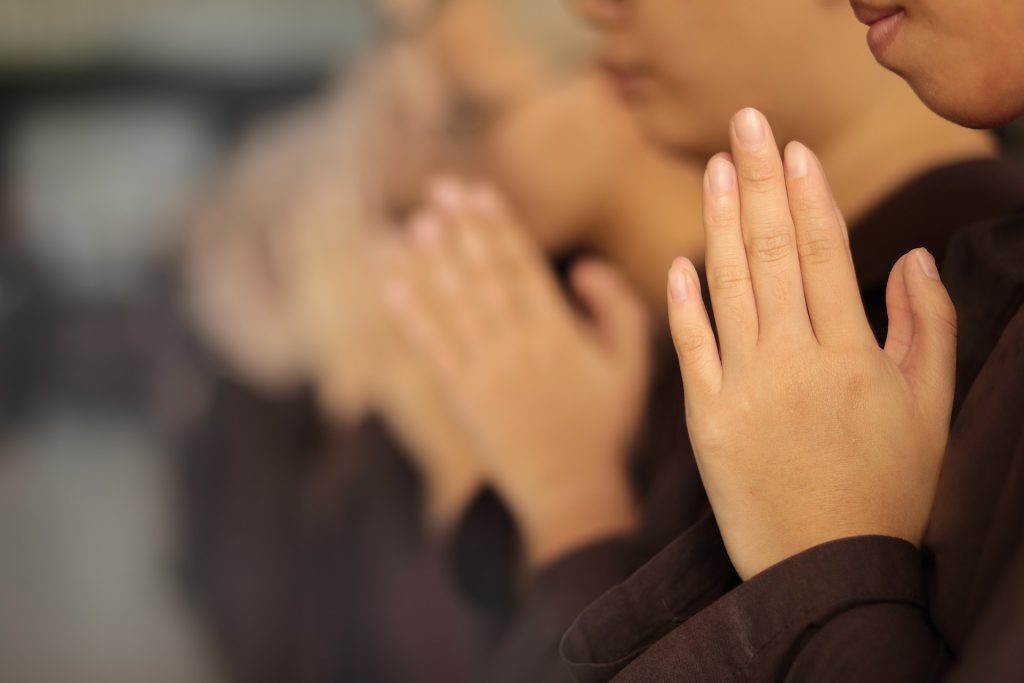
To form a Gassho, clasp both hands together, palms touching, fingers and thumbs close together and extended upward in a prayer stance, and hold them so the thumbs are close to the centre of the chest (heart chakra). After a few moments, with your hands clasped together, make a modest bow to demonstrate respect.
Water temperature and comfort
Cold water is not required for a Reiki ritual and does not wash away negative energy. If you take an ordinary shower, choose a temperature that feels comfortable and follow your usual safety needs. Do not use a cold shower, pour water over yourself, or change your bathing routine because you believe Reiki requires it. A symbol placed over a showerhead or water is a personal spiritual gesture; it does not purify water or heal the body.
When these rituals fit
Kenyoku-ho and the Reiki Shower are most often used as transitions: before a session, after a session, between clients, or at the end of a demanding day. Some practitioners do them daily; others use them occasionally or not at all. None of these patterns is required, and there is no schedule that makes a practice more valid.
If you work with clients, a practical reset between sessions might include washing your hands, opening a window, changing the linen and taking a few slow breaths. The ritual can sit alongside those actions, but it does not replace them. The preparation page covers the practical setup.
A minimal version
If you want a short, ordinary transition, try this:
- Wash your hands with soap and water.
- Stand or sit comfortably and take three easy breaths.
- Bring your palms together if that is comfortable, or rest your hands at your sides.
- Notice one thing you are leaving behind and one thing you are taking with you.
- Lower your hands and move on.
You can add a stroke, a symbol or a shower visualisation if it belongs to your practice. Leaving them out does not make the transition incomplete.
Questions people ask
Do I need to do this every day? No. There is no evidence that a Reiki channel "shrinks" or becomes blocked without daily cleansing. Use the ritual when it helps you mark a boundary.
Is Kenyoku-ho religious? It comes from a Japanese spiritual and healing context and is practised differently across lineages. You can treat it as a cultural or personal ritual without adopting any belief about energy.
Can I just wash my hands? Yes. Ordinary washing is the most important practical step if you are moving between clients.
Does the Reiki Shower protect me from other people's problems? Some traditions describe it that way, but it is a visualisation, not a protective barrier. If a client interaction leaves you uncomfortable, set a practical boundary or talk to a supervisor.
Where can I learn more? Hatsurei-Ho describes a related practice in some lineages, and The 5 Reiki Principles offers a daily reflection that does not depend on ritual.
Related topic: Treatment and hand positions, 10-day treatment with acupressure, Advanced techniques, Alternative techniques in treatment, Alternative ways to use the hands.